recent show: model collapse @ ars electronica sep 2025 soon starting residency: bodies-machines-publics @ khoj, new delhi fellow 2025 at: onassis air/onx now on show: archive.dweller @ centraal museum > dec 2026

phantasmagoria 幽園弱訊
solo exhibition, 2026 @ videotage
* made during 2 month residency in hong kong *
* made during 2 month residency in hong kong *
Is an immersive exhibition that uncovers the forgotten technological sites and infrastructures shaping Hong Kong ... Through ghost-hunting devices, lingering signals, archival traces and networked shadowplay.
hong kong stands as a beacon of economic vitality and strong consumer power, continuously upgrading its technological infrastructure to maintain its competitive edge. yet the relentless pace of renewal has left many facilities obsolete — sites that once thrived are now overlooked. this cycle of rapid replacement creates ruptures between forgotten infrastructures and contemporary urban development, prompting questions around these untold stories. what physical traces have these legacies left? how have they disturbed the present? what energy flows whisper about their current conditions?
the exhibition examines evolving and often neglected technological sites across hong kong and the pearl river delta, archiving a selection of the invisible infrastructures that underpin urban development and impact today’s generative AI systems. beyond researching sites of technological significance through public sources, cyanne navigates selected locations with self-made “ghost-hunting” devices that record environmental parameters, including currents, heat, and network presence, as a symbolic act to sense their continuous lingering presence today.
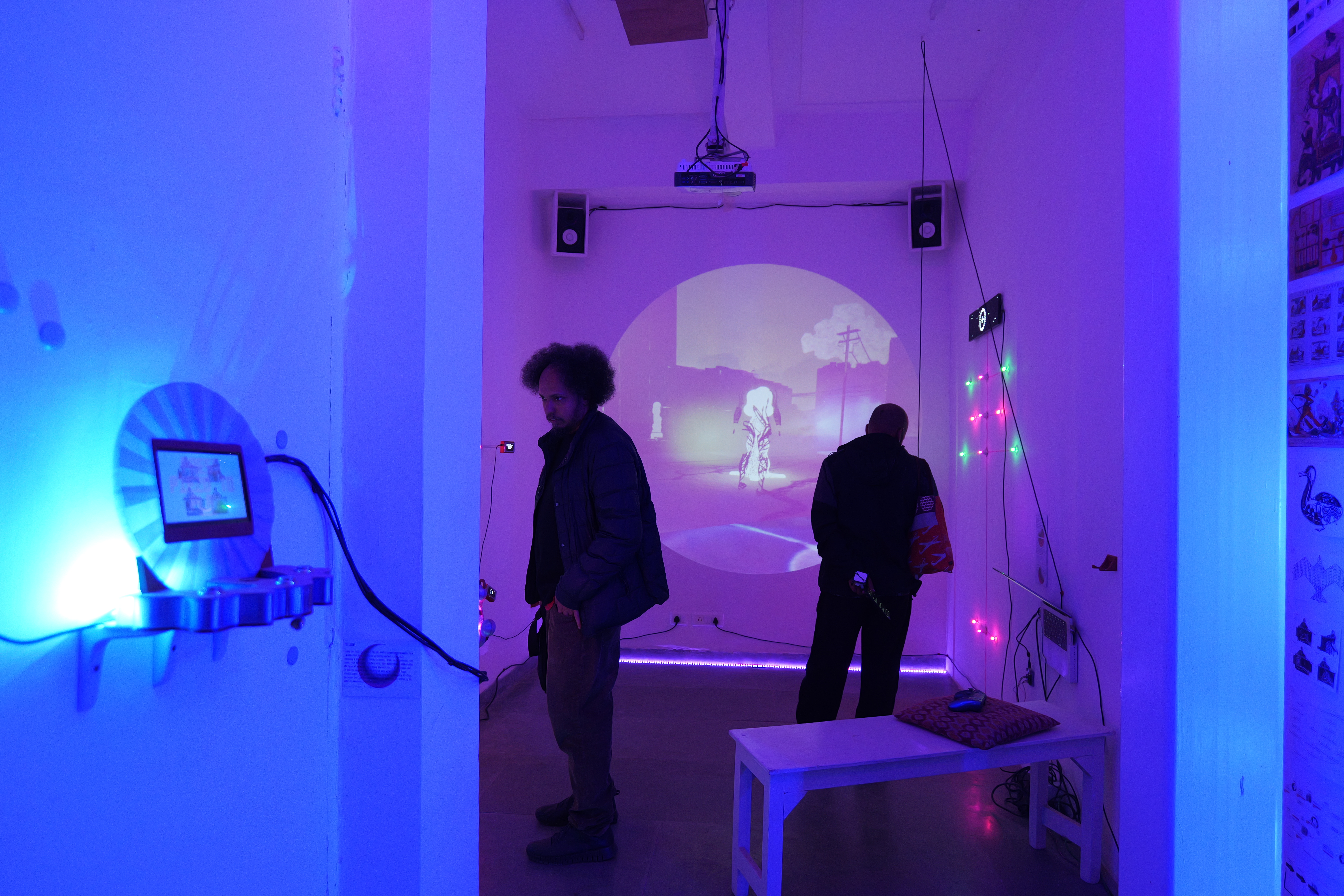
in a dark room repurposed from a former slaughterhouse, the ghost-hunting devices and their collected "anomalous" noise signals are reactivated in a twenty-one minute shadow play merging travelling scenes fed through vintage equipment, data visualisations, uncatchable spotlights, digital shadow hunting, humming field recordings, archived ghost stories, and generative projections to make the interrelations among facilities across time and space tangible.
the machines wake up and communicate opaquely, sharing clues from interactive place-name prompts from hong kong and guangdong province to imaginative quotations of research pointing to these locations’ significance in technological histories.
the eerie imagery and sound creates a polyphonic collage that is automatically conducted by wireless networked communication between the main interface, sculptural devices and the assembly of other hardware. as a visitor you influence the play by wandering around the 3D environment by triggering text based stories from the archive about the locations causing changes in the exhibition space.
the lantern projections reflect on decision-makers’ faith in advancing intelligence by extracting data and earthly resources to mobilise the "unstoppable hunger” and costs of our need for technological advancement.
the immersive spatial arrangement and controlled sequence of revealed elements recall the phantasmagoria, screen illusion theatre in the late 18th century. designed to immerse audiences in controlled encounters with fear (through ghosts, political specters, corpses and demons) in a believable yet imaginary horror experience. phantasmagoria is characterised by atmospheric settings that involve projections from magic lanterns, sound, and smoke, which rely heavily on technology while intentionally obscuring its mechanisms creating a communal rehearsal space for modern anxieties. as an early commodification of designed experience, the term now describes how capitalism transforms material and social relations into seductive images that appear natural, autonomous, and self-animated.
rather than reproducing fear, this exhibition repurposes the emotionally manipulated space so that ‘ghosts’ illuminate the past (archival information) and the present (environmental parameters) of vanished and newly renovated facilities. considering technology not as seamless progress but as deeply haunted, material, and entangled with histories of (emotional) labour, control and capitalism, the experience calls for critical remembrance and further inquiry.
energy imported from the daya bay nuclear power station, e-waste processing facilities located within WEEE · PARK, the informal repair and repurposing ecosystems in shenzhen’s huaqiangbei and the soon to be opened highly energy consuming largest datacenter sandy ridge facility are woven into a symphony by DIY making and hacking interventions. mapping a partially perceptible spatial diagram of hong kong and its surrounding regions, shaped by the interplay of power, matter, and signal, is a first step away from the passive role of consumerism.
curatorial statement text by: doris poon
sound: ymer marinus, the living void - QTHQ
project developed during a 2 month residency in hong kong at videotage
curated by | 策劃:doris poon 潘韻怡
coordination and execution | 統籌及執行:chung wing shan, stanley ng 鍾詠珊、吳栢榮
visual design | 視覺設計:lokto
sound design and technical expertise | 聲音設計及技術支援:the living void – ymer marinus
image courtesy of the artist and videotage
photography: felix sc wong
presented by | 主辦:videotage 錄映太奇
supported by | 資助:stimuleringfonds
venue sponsor | 場地支援:V54


 spectral_meters
these handheld devices are used to log environmental data/noise, they consist of different sensors to capture parameters among: temperature, wi-fi networks, current draw, magnitude, electro magnetic frequency, humidity, bluetooth. they are inspired on shenzhen’s DIY 随身充电测试电源 (portable charging test power supply), bricolages of power banks held together by hot-melt glue or electrical tape to measure electrical currents of second hand phones and gadgets.
 travel log of measuring environmental noise and signals with
spectral_meters at first telegraph cable huts on hong kong island, informal repair
markets, recycle hubs and more.
travel log of measuring environmental noise and signals with
spectral_meters at first telegraph cable huts on hong kong island, informal repair
markets, recycle hubs and more.

toxic_lanterns
3 dwelling cyber sculptures, waking up on their own terms and sharing readings from recordings of networked presence captured by spectral_meters or prompting keywords from research sources: glitch feminism - legacy russel and updating to remain the same - wendy hui kyong chun.

phantasmagoria_index
spatial archive of observations and found background information about locations in pearl river delta of technological infrastructural importance in past and presence in the categories: power, signal and matter. with focus on ecological damage, early communication infrastructure, data harvesting and processing, replication, informal markets and sustaining of current generative AI services. triggered via game environment.
 decompression_spine
cybersculpture with local language model (ollama) feedback loop. among procedural animations, within the 21 minutes it takes sentences from research on ghosts and sociological imagination on haunting inspired by the publication ghostly matters of avery gordon, and compresses the meaning in 3 steps to a single word - to then reverse engineer it back into a sentence deriving from its initial meaning. this feedback loop shows how digital ghosts appear, and how data anomalies are closely tied to heuristic filtering, (manual) labelling of data and large scale scraping of online available content.


data visualisation processing the ‘anomalies’ logged by spectral_meters converting them into sigils as reminders for the future.
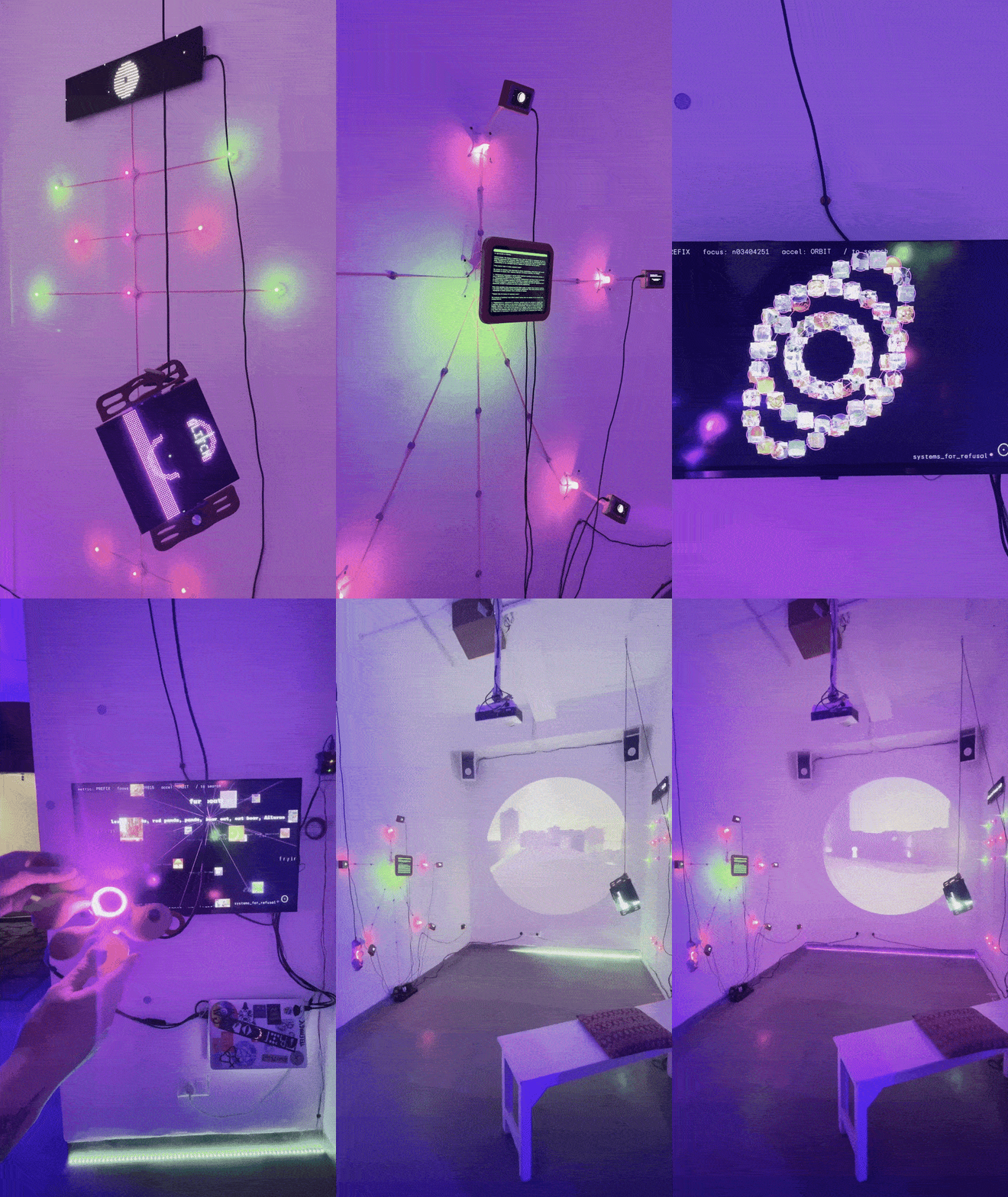
systems_for_refusal
networked installation, 2025 @ khoj, bodies-machines-publics
* made during 4 week residency in new delhi *
* made during 4 week residency in new delhi *
explores the poltergeist inside contemporary generative ai image generators and llms ... a disembodied intelligence that moves symbols without touching the world that produced them.
when meaning is reduced to correlations, ambiguity is erased, difference is classified, and power decides what becomes “signal” or disposable “noise”..
the installation brings together unruly tools, looping script and broken taxonomies to expose violence embedded in generative AI. language models circulate research questions prompted by visitors behaviors in the space; datasets are navigated through friction, weight and resistance; supply chains unfold across timezones; bodies and fossils surface from technological exhaustion. these elements reveal an ecosystem in which labor, resources, and meaning are continuously extracted and obscured.
systems_for_refusal proposes a refusal of certainty, inviting attention to noise, anomalies, and beings that escape classification.
the research and development of the project systems_for_refusal is supported by KHOJ and rembrandt residency (embassy of the kingdom of NL in india). it was produced as part of bodies-machines-publics 2025.
images: KHOJ open days 2025 © khoj international artists association
sound + tech collaboration: ymer marinus, the living void - QTHQ
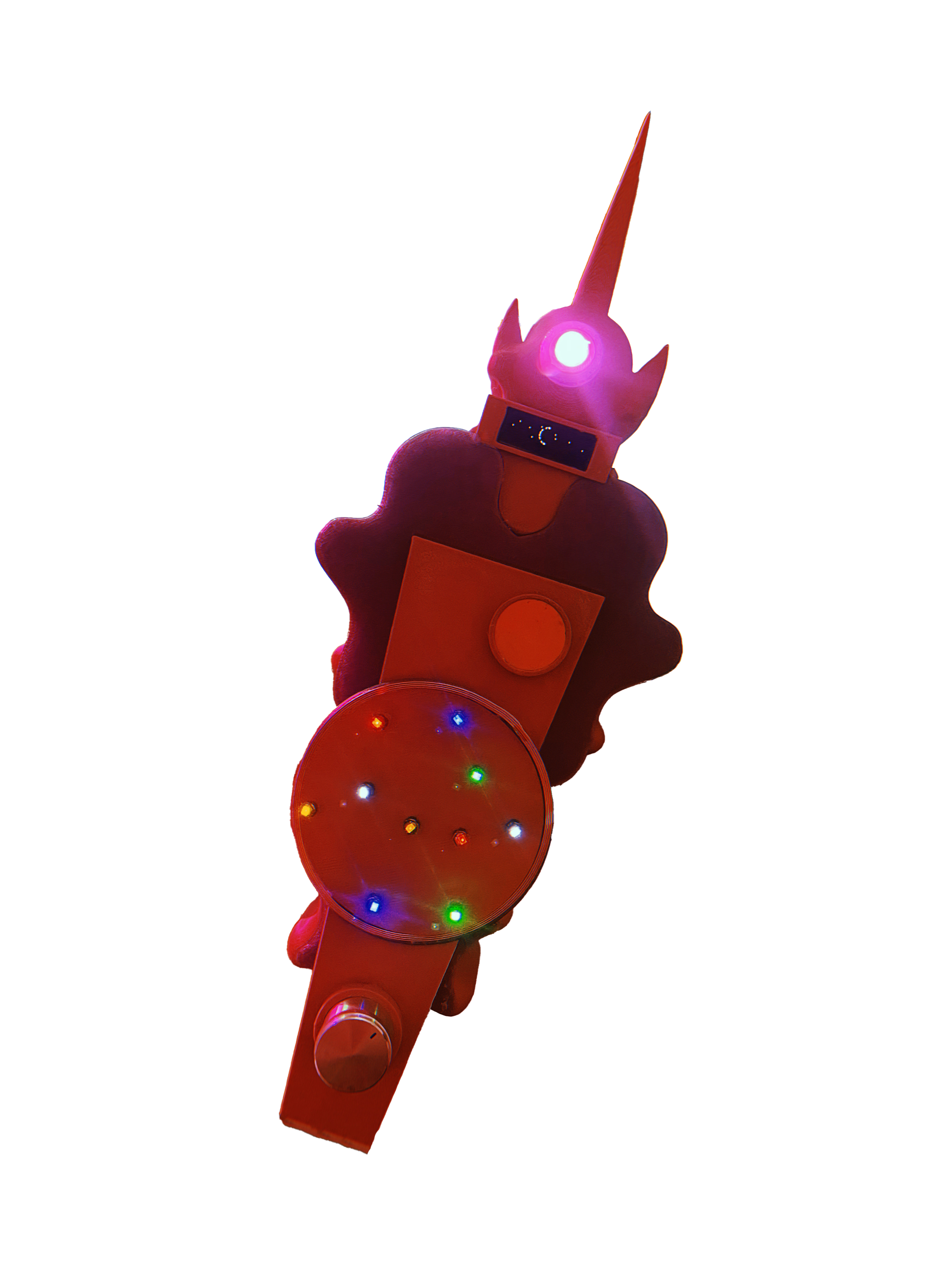
conversation.sparker
device that allows you to read out research by scanning the purple dots on the wall, and spark questions the central chatbox. it acts as a small ritual tool—triggering disturbances that reshape how meaning circulates through the network.

model.collapse
the mining that makes AI possible is both literal and metaphorical. the new extractivism of data mining encompasses and reinforces the old extractivism
of traditional mining and colonial power structures, in which corporations centralise raw materials, information, human bodies, and creative labor as
sources of power. the production chains are carefully kept out of sight, orchestrated by silicon valley, where these technologies are developed without reflection or accountability. this clock maps the extractive supply chains through different timezones enabling AI to operate.
source: atlas of ai - kate crawford
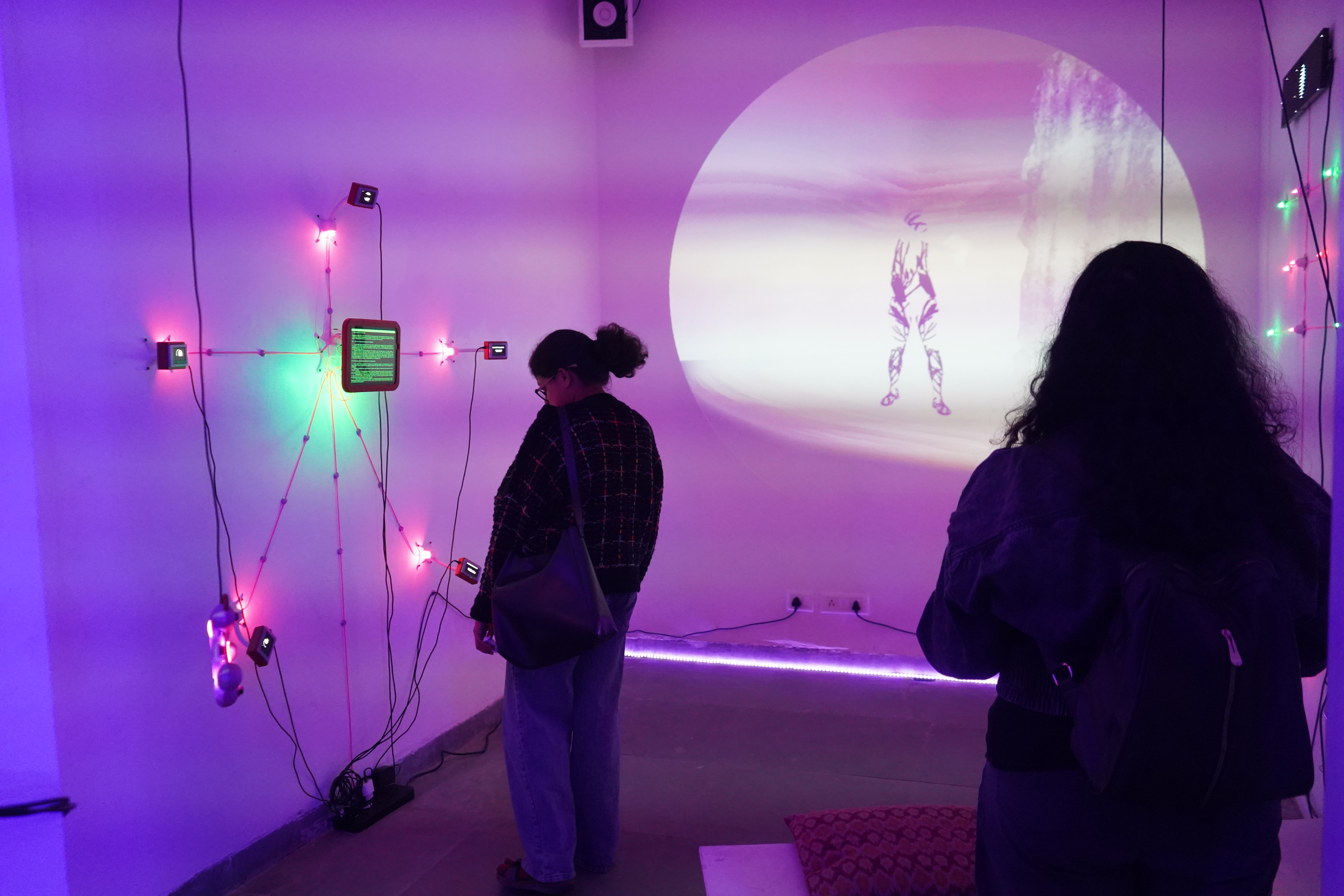
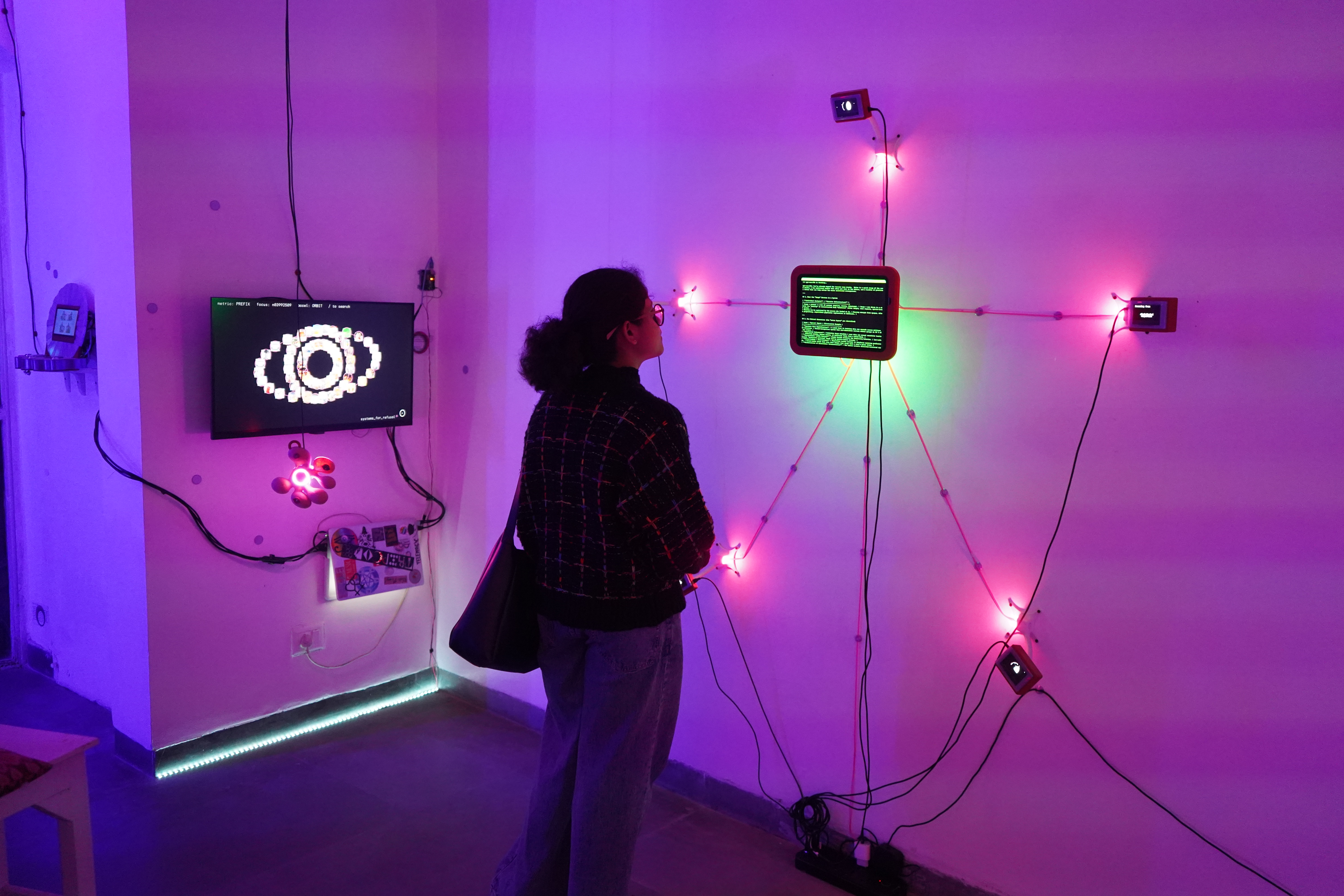


a terminal like breakout room where five local language models continuously discuss the research questions gathered throughout the space. every question is debated for 180 seconds, summarized, and fed back into the network, creating a recursive drift of machine-to-machine dialogue. each screen is linked to one of the surrounding works, the body of the conversation is the space itself: a living transcript shaped by the tools, sensors, and unstable logic. it reveals how language models loop, flatten, and misinterpret—and how meaning shifts when bots speak only to each other.
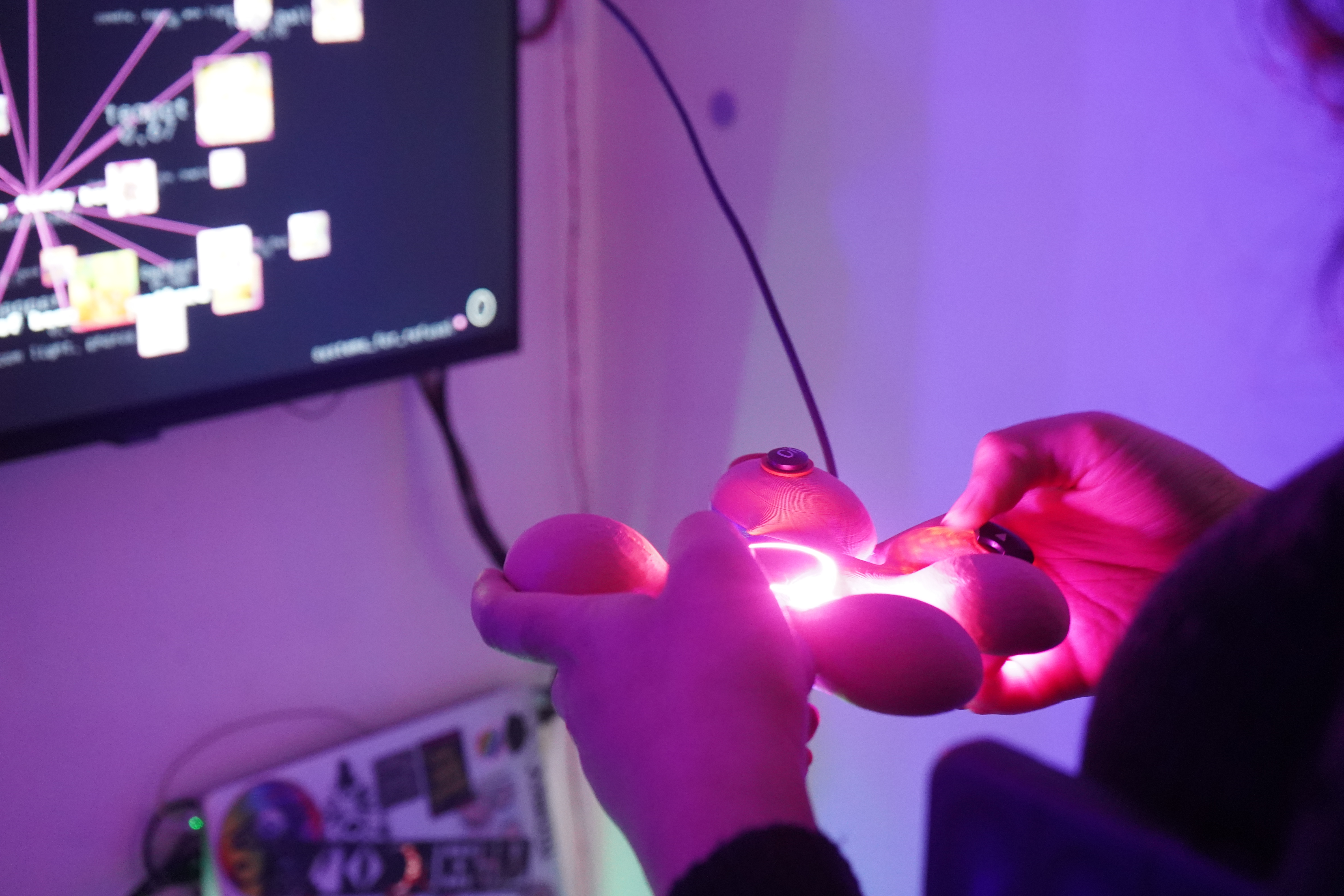 ontology.nav
controller that allows you to browse connections between the tinyimagenet dataset with physical restraints: balance, weight, friction, falling, resistance ... browse close related concepts and see how the image has transformed to infrastructure. inspired by: ai snake oil - sayash kapoor + arvind narayanan, made with: processing + makey makey
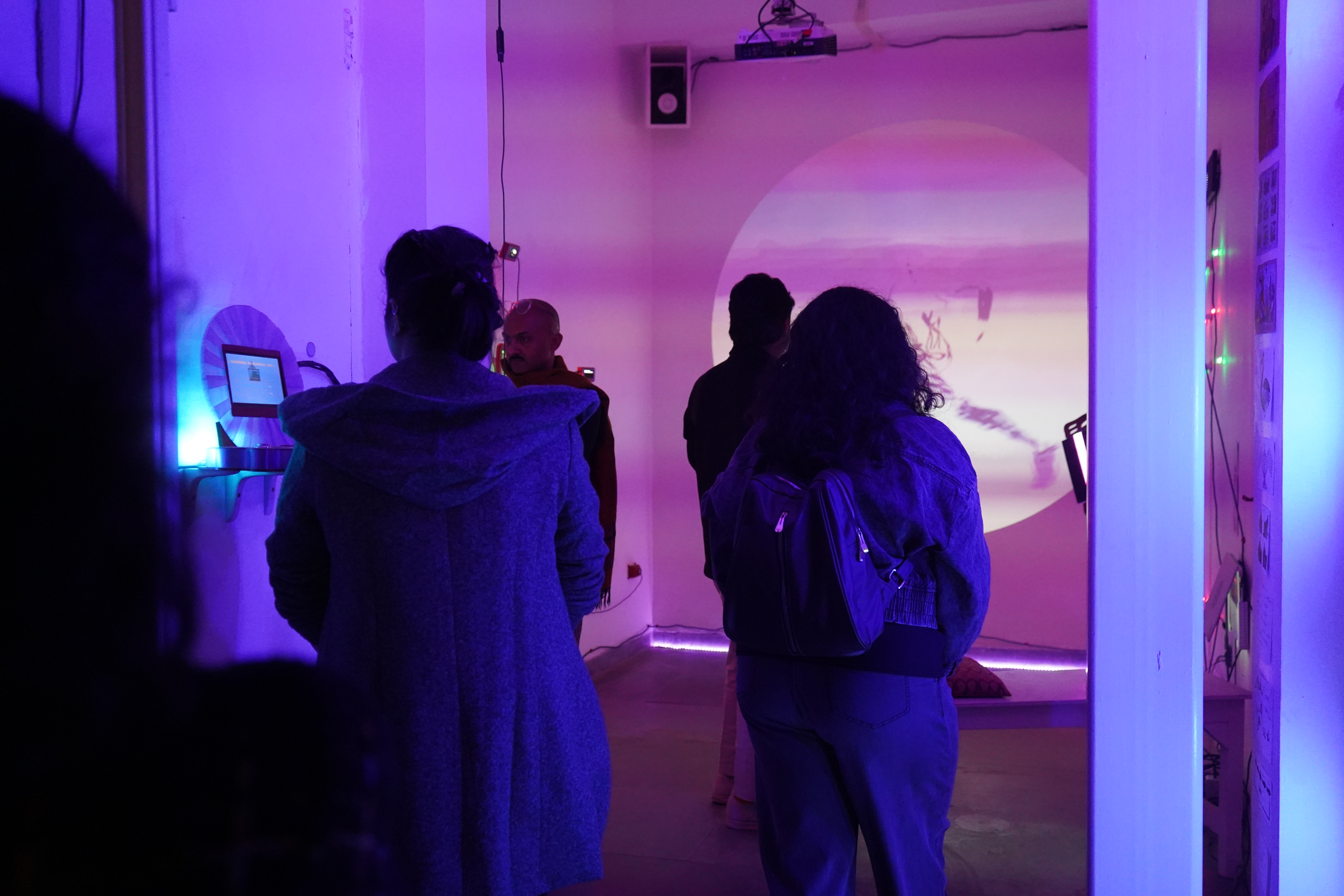
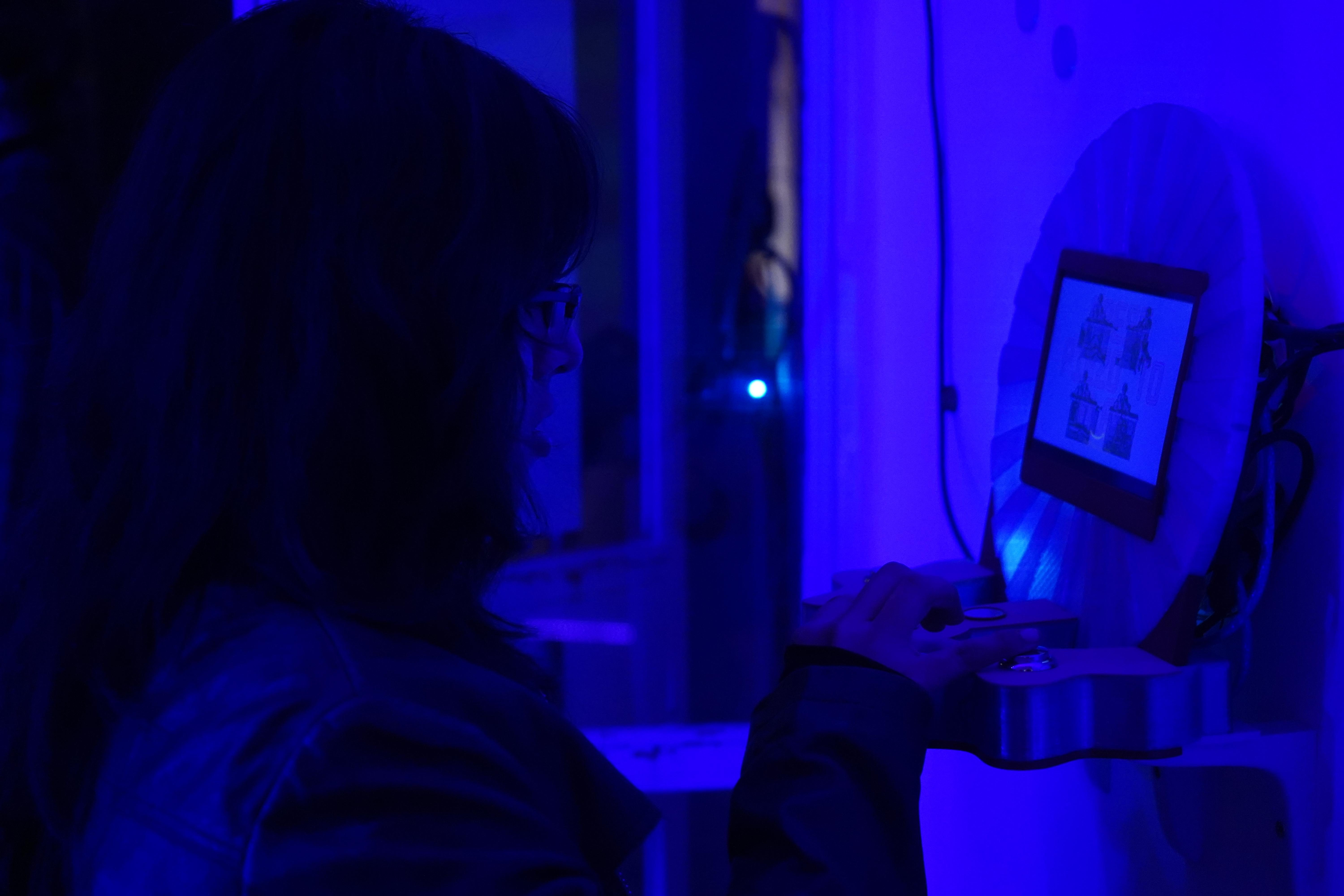
 mturk
mturk
bartop that tells the story of the 18th century automaton the mechanical turk a machine that dazzled audiences by beating napoleon at chess while concealing a human operator inside its cabinet. today, amazon mechanical turk repeats this illusion at planetary scale: labor exploitation is hidden behind the façade of automation while hiding the harsh reality of precarious labor. in 2008 the imagenet dataset was created using workers to label images, classify objects, and produce the training data that contemporary AI relies. you become the classifier — sorting images from the tinyimagenet dataset into the right categories and confronting the seductive smoothness of machine logic under growing time pressure. inspired by: costs of connection - nick couldry + ulises a. mejias

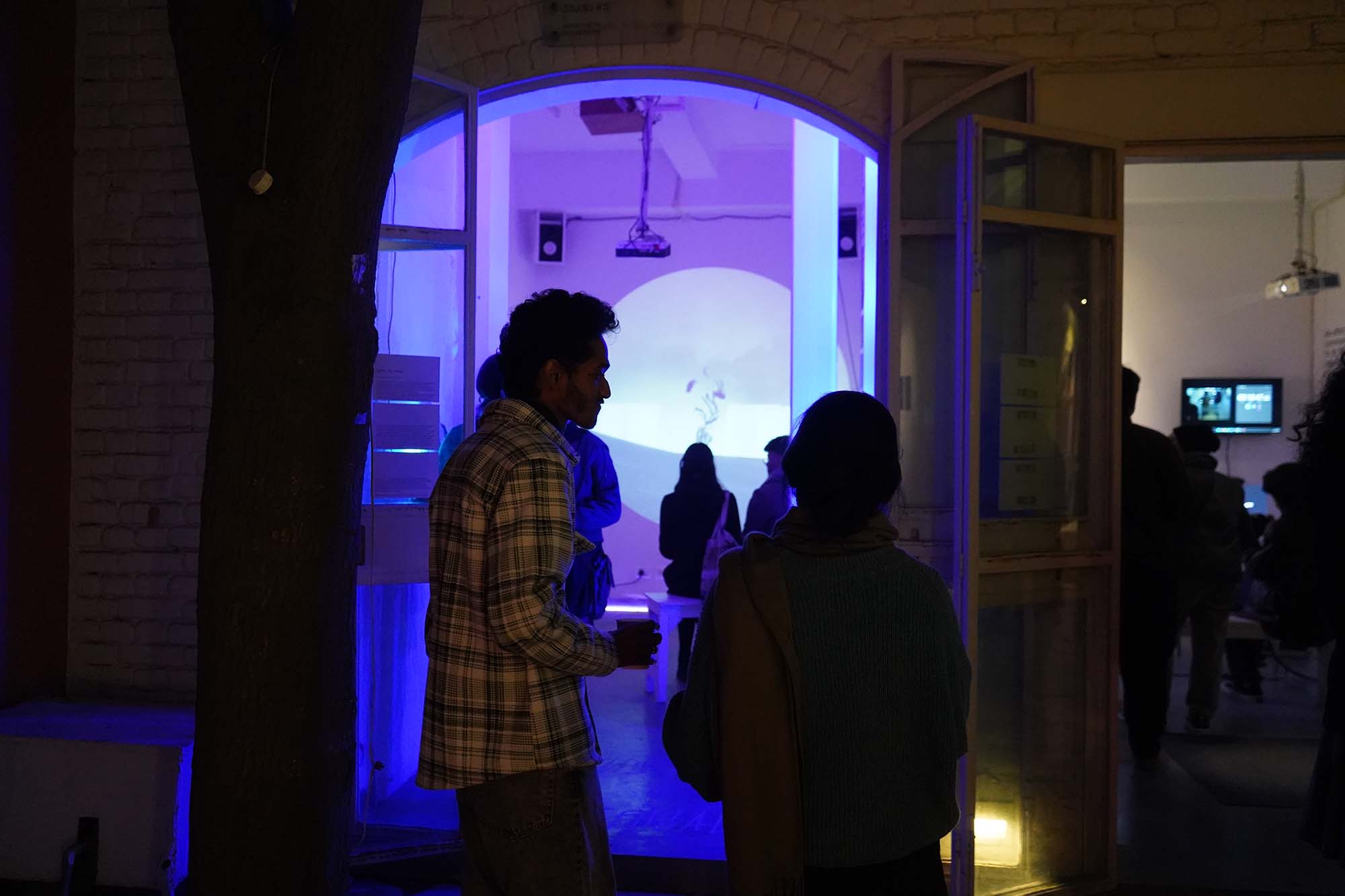
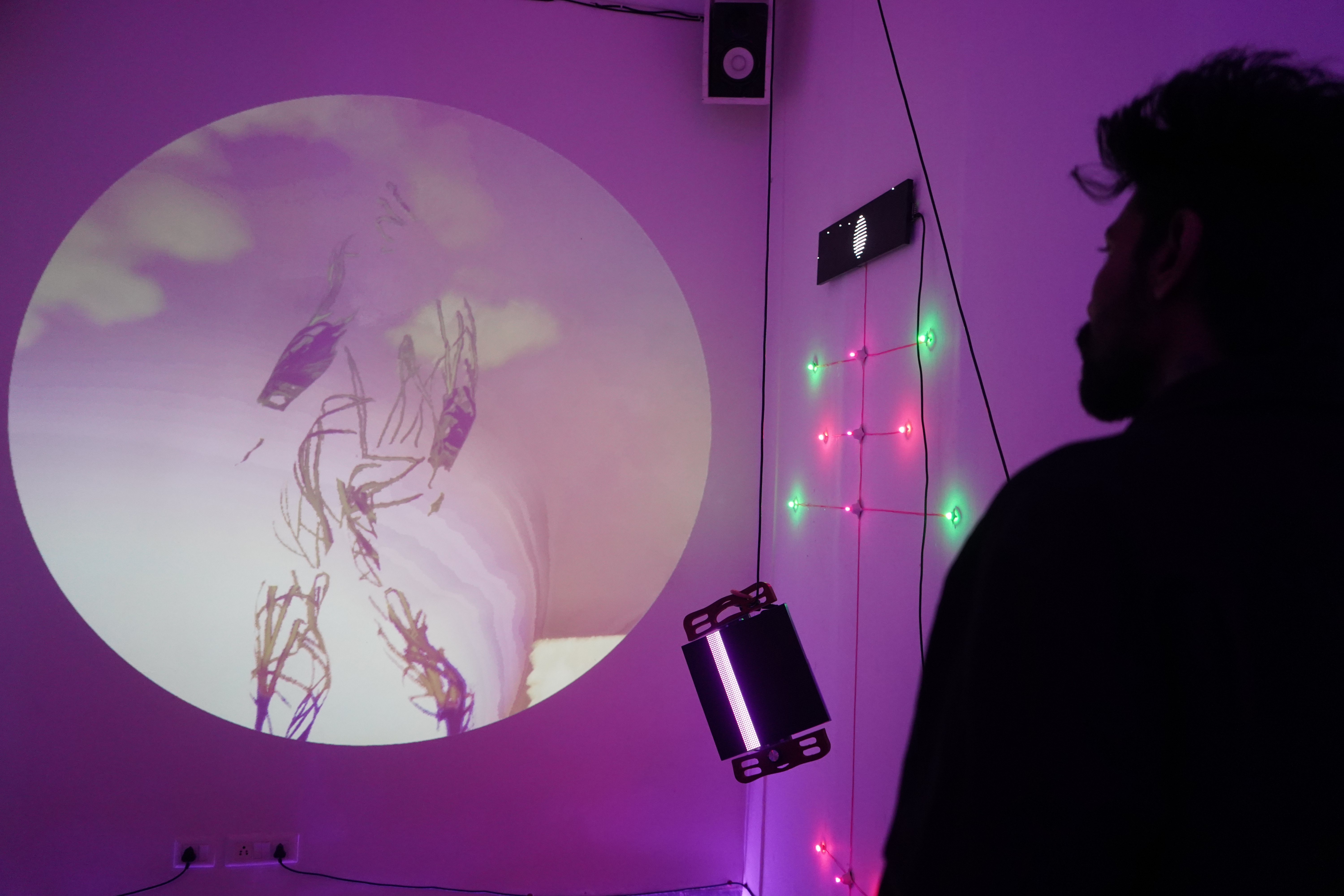 biom_for_refusal
AI is one of the largest planetary infrastructures ever built by humans — an
energy-hungry, water-evaporating, labor-absorbing system that competes with
basic human and ecological needs while accelerating the climate crisis. we
find ourselves in a recursive loop. AI is eating itself—slowly collapsing
into noise and nonsense. what remains is an informational flow that exhausts
and poisons itself—a culture slowly turning into ruins. a digital wasteland
full of fossils, whose artifacts we must learn to read.
biom_for_refusal
AI is one of the largest planetary infrastructures ever built by humans — an
energy-hungry, water-evaporating, labor-absorbing system that competes with
basic human and ecological needs while accelerating the climate crisis. we
find ourselves in a recursive loop. AI is eating itself—slowly collapsing
into noise and nonsense. what remains is an informational flow that exhausts
and poisons itself—a culture slowly turning into ruins. a digital wasteland
full of fossils, whose artifacts we must learn to read.what endures? what decays? what forms of life emerge after extraction?
what remains once the earth has been depleted for our technologies?
set in the near future biom_for_refusal imagines a world full of hybrid remnants that took shape by the growing metabolic demands of our technologies. organisms spawn; part fossil, part prototype—constructed from minerals, organic matter, e-waste and synthetic debris refuse classification: archaic and futuristic, biological and mechanical, simultaneously decaying and becoming. they make visible both the environmental cost of our technological hunger and the possibility of new life emerging from technological ruin. you encounter real and speculative species that evade taxonomy and embrace noise. they are relics of extractive economies and byproducts of technological progress—field observations of hybrid specimens where mineral, organic, and digital material collapse into one another. these beings refuse classification: they are both archaic and futuristic, biological and mechanical, decaying and becoming.
inspired by: a bestiary of the anthropocene — nicolas nova & DISNOVATION.ORG, dark ecology — timothy morton, queer ecologies - catriona sandilands + bruce erickson and the abundance (urkopplad) — remnants of disconnected cables in khirki village
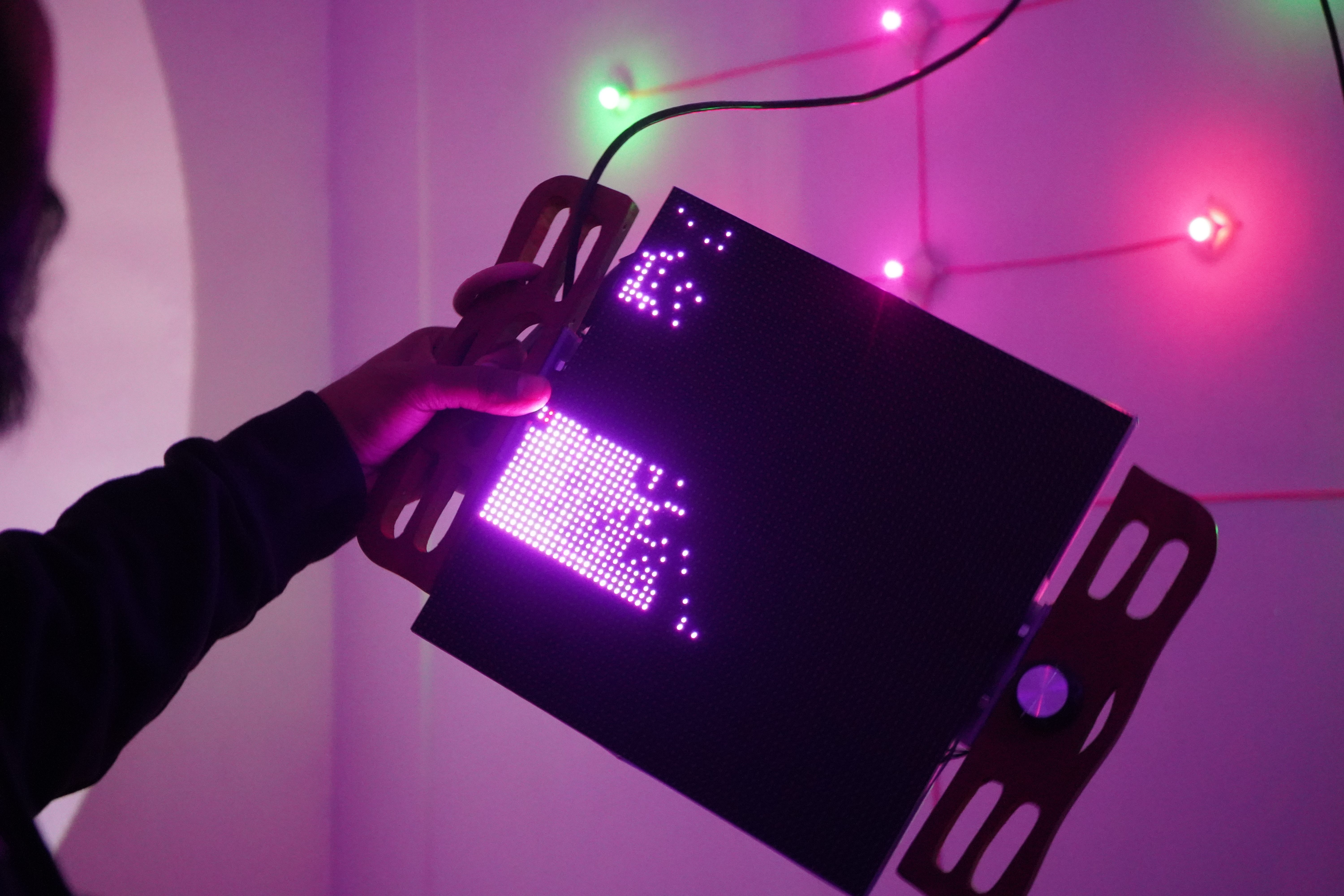 matrix.hymn
 guiding you through the fragmented ecology of biom_for_refusal, a handheld device accompanied by a radio-towering matrix. together they narrate the terrain and help you navigate the artificial fabric and hybrids of this world—acting as talismans for sensing futures shaped by collapse, mutation, and technological exhaustion. triggers are send through the network to systems_for_refusal.
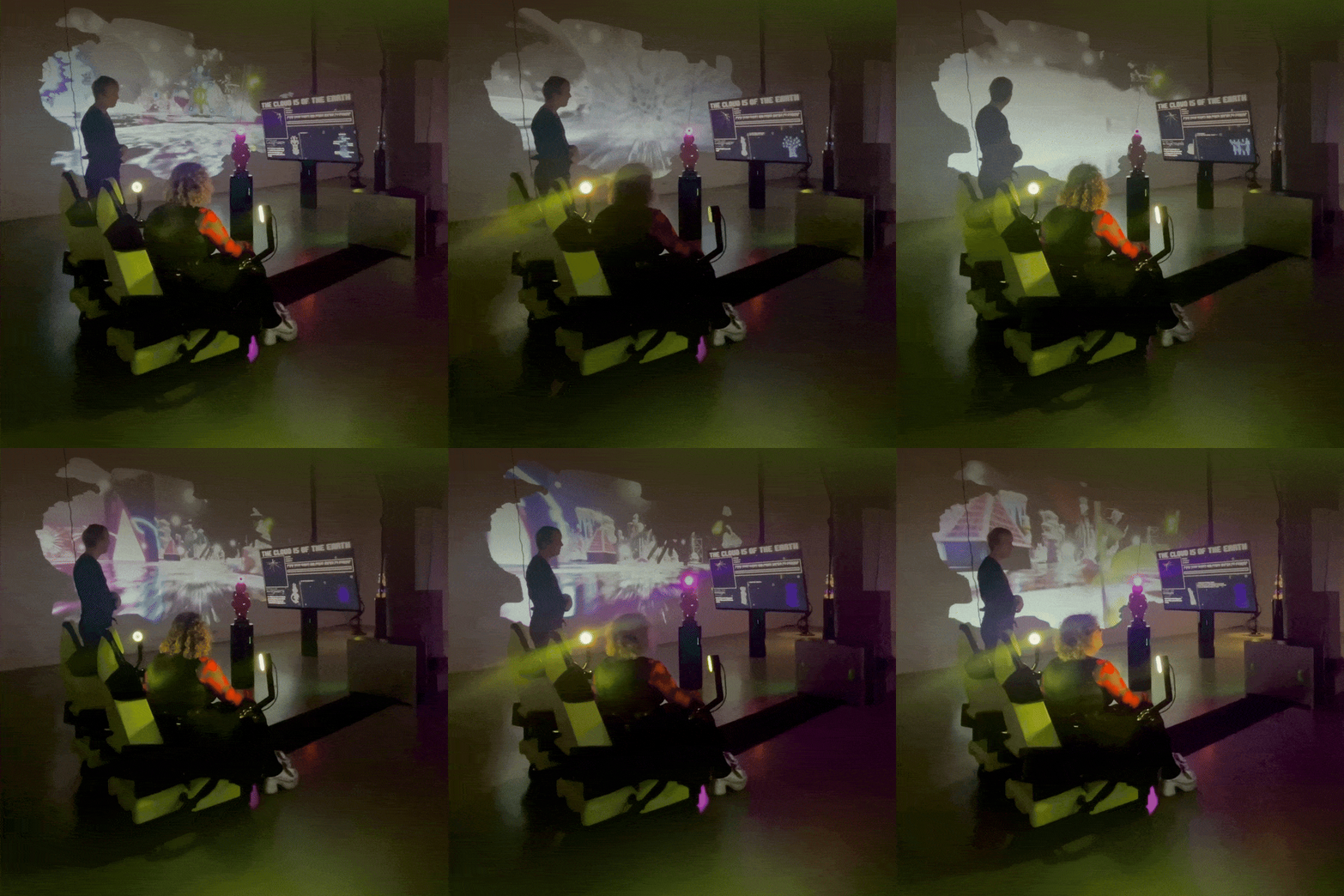
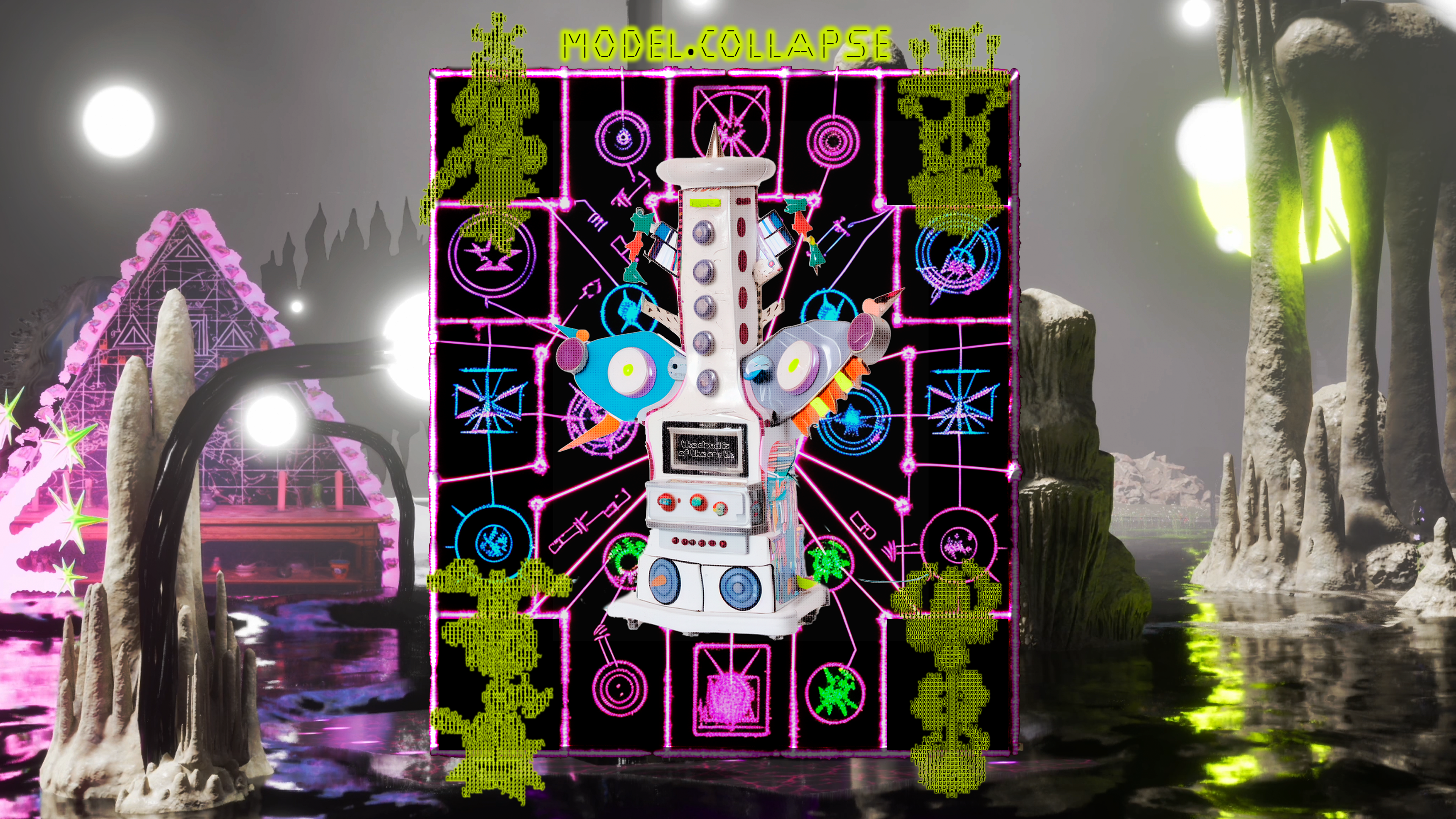
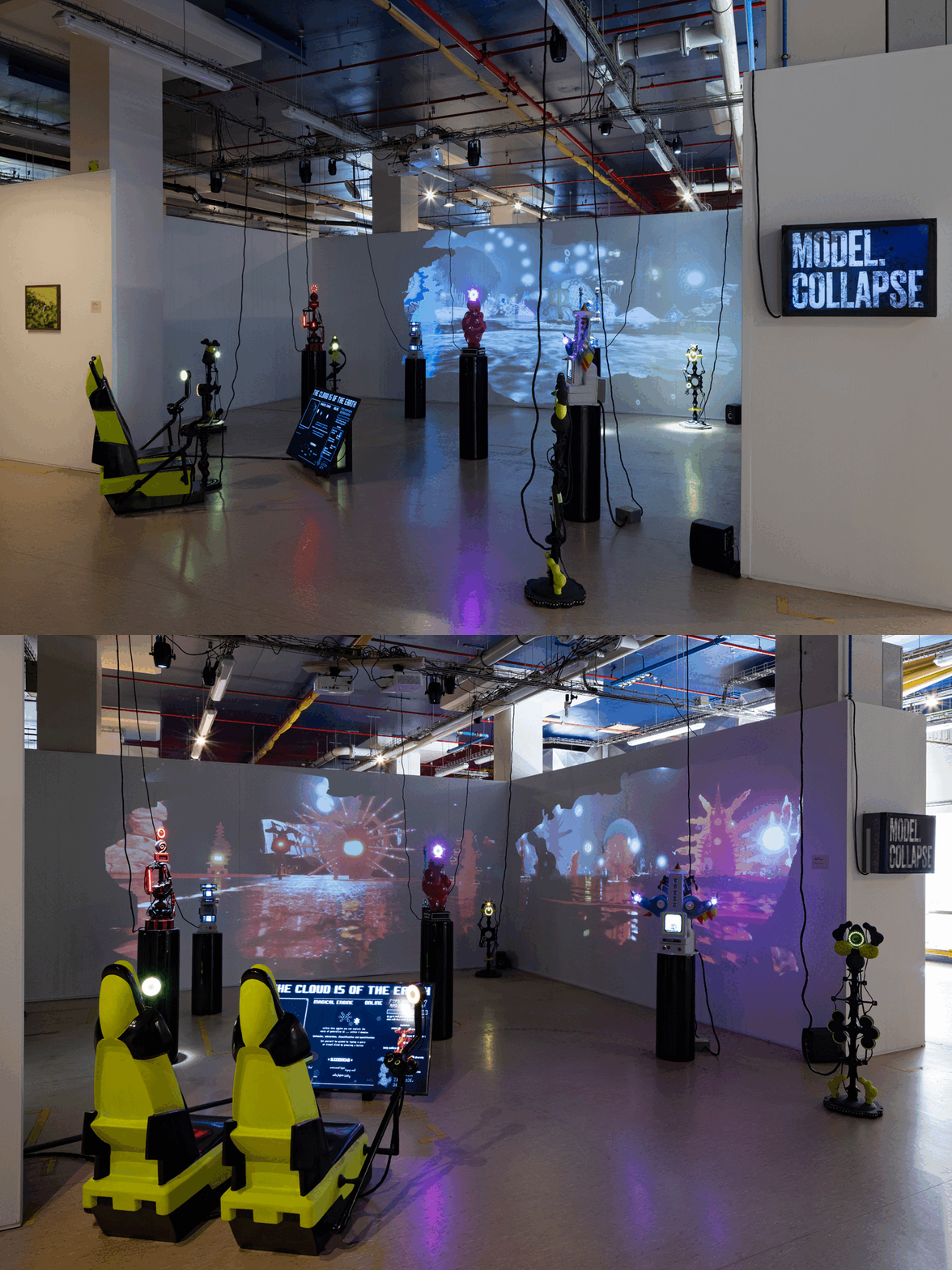
model collapse
solo exhibition, 2024 - 2025 @ tetem
Is an immersive exhibition that depicts the landscape from which (generative) AI emerges..
revealing its self-consuming origins in extraction of the earth’s resources and data through relics, artifacts and stories from the past...
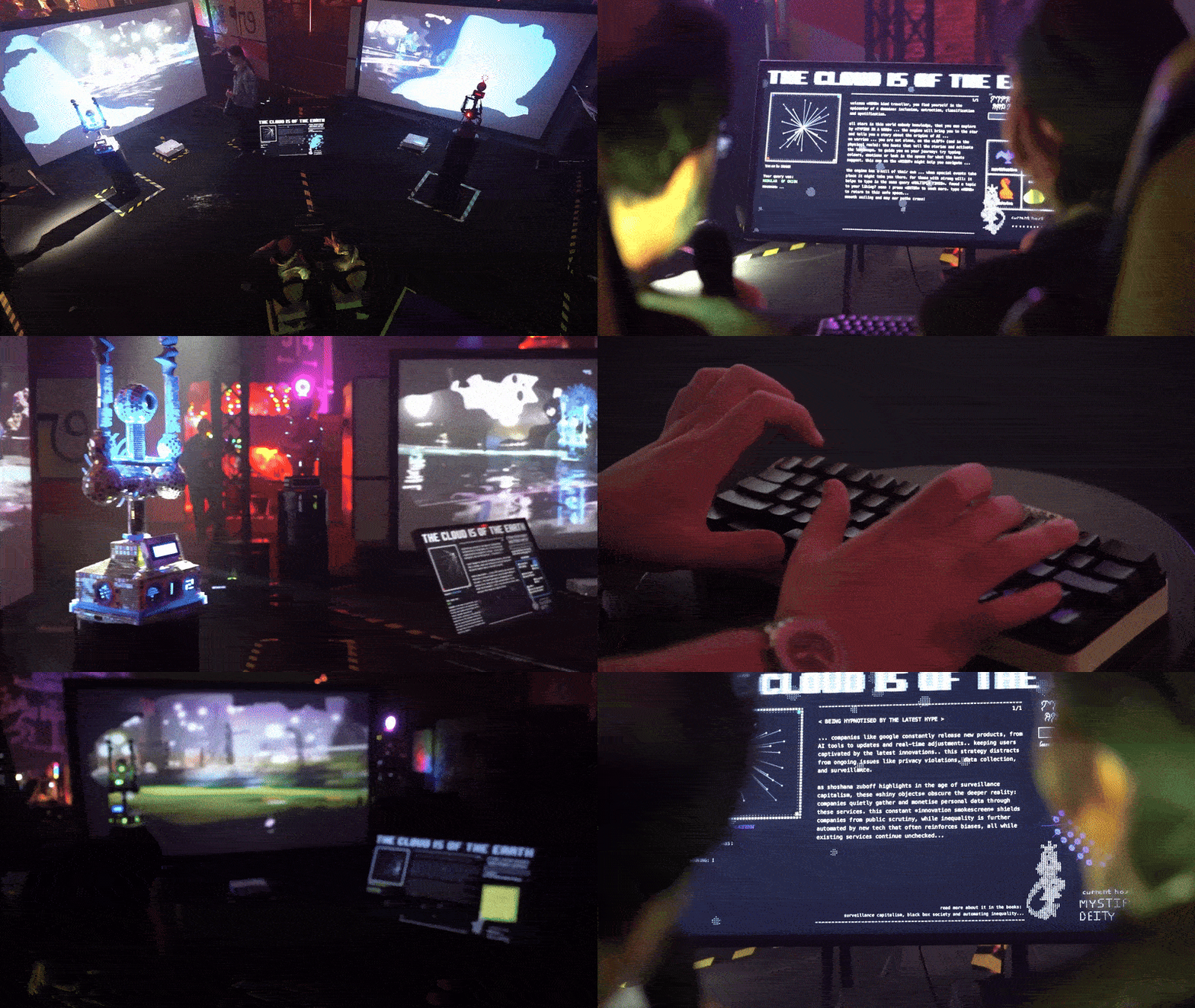
type in a query at the main station, where you are hosted by a local language model that determines your location within the generative digital environment. your query dynamically breathes life into this digital biome and sets the scene of the exhibition….
the exhibition is inhabited by cyber sculptures with distinct forms, voices and logics... as dynamic narrators sensitive to changes in light, the cyber sculpture that resonates most with your query – awakens and shares its knowledge through the central interface.
together they resist dominant computational ideologies entangled in ai’s origin narratives, telling stories of mystification, gender bias, non-western epistemologies, the ecological cost of computation, and labor ...
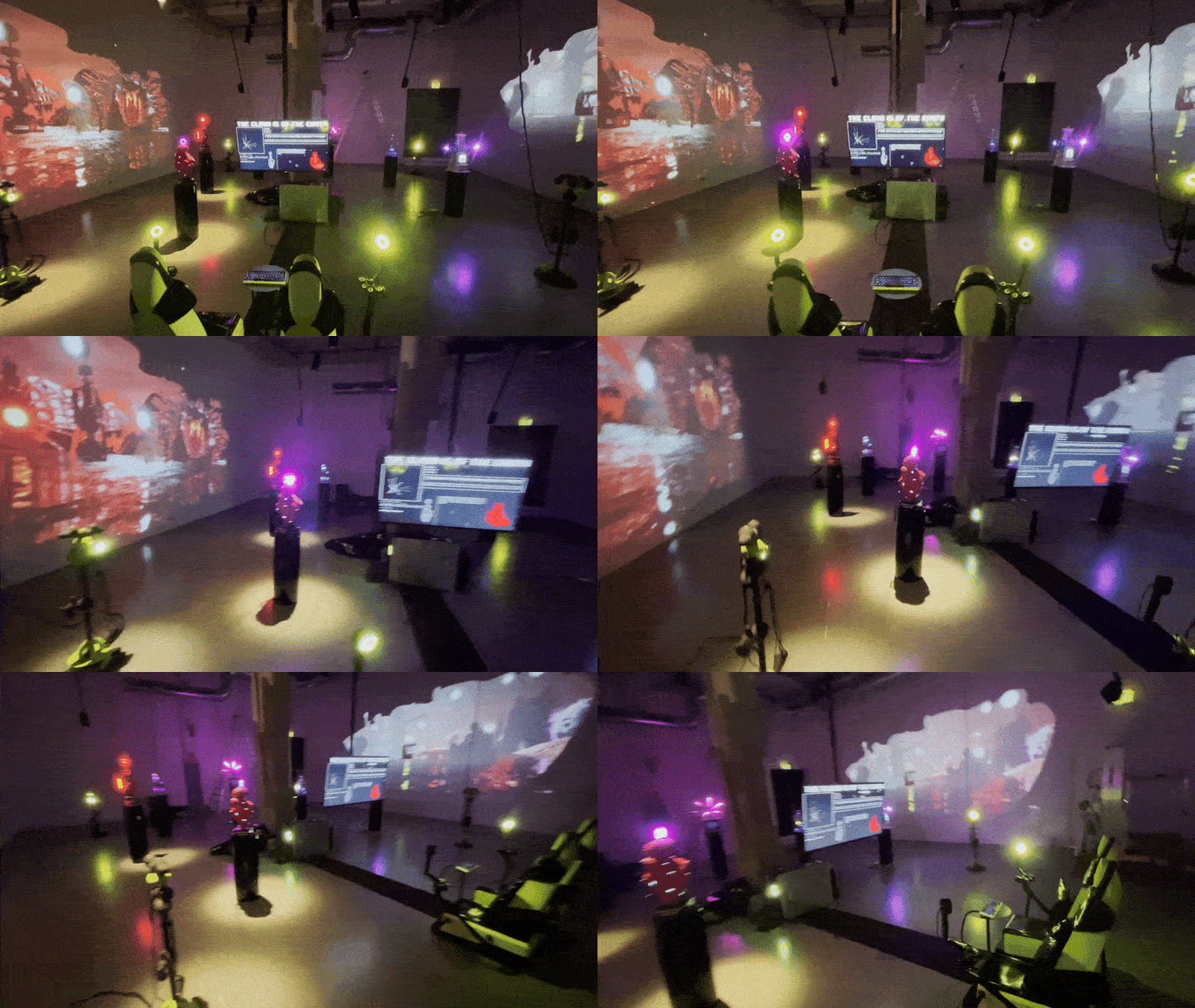
model.collapse was visible at:
︎︎︎ tetem, enschede sept 26 2024 until feb 23 2025
︎︎︎ noorderlicht biennale machine entanglements july 12 until aug 28 2025
︎︎︎ ars electronica september 3 - 7 2025
︎︎︎ 39c3 chaos computer congress hamburg december 27 - 30 2025
exhibition in collaboration with: ymer marinus and tetem
update interface version 2: collaboration between telemagic (+ roos groothuizen)
cyber sculptures: includor, extractor, mystificator, classifier supported by stimuleringsfonds creatieve industrie
cyber sculptures: patriarch_smasher, geoglyph, museum is closed and phantasmagoria supported by kf hein fonds
sound: ymer marinus, the living void - QTHQ

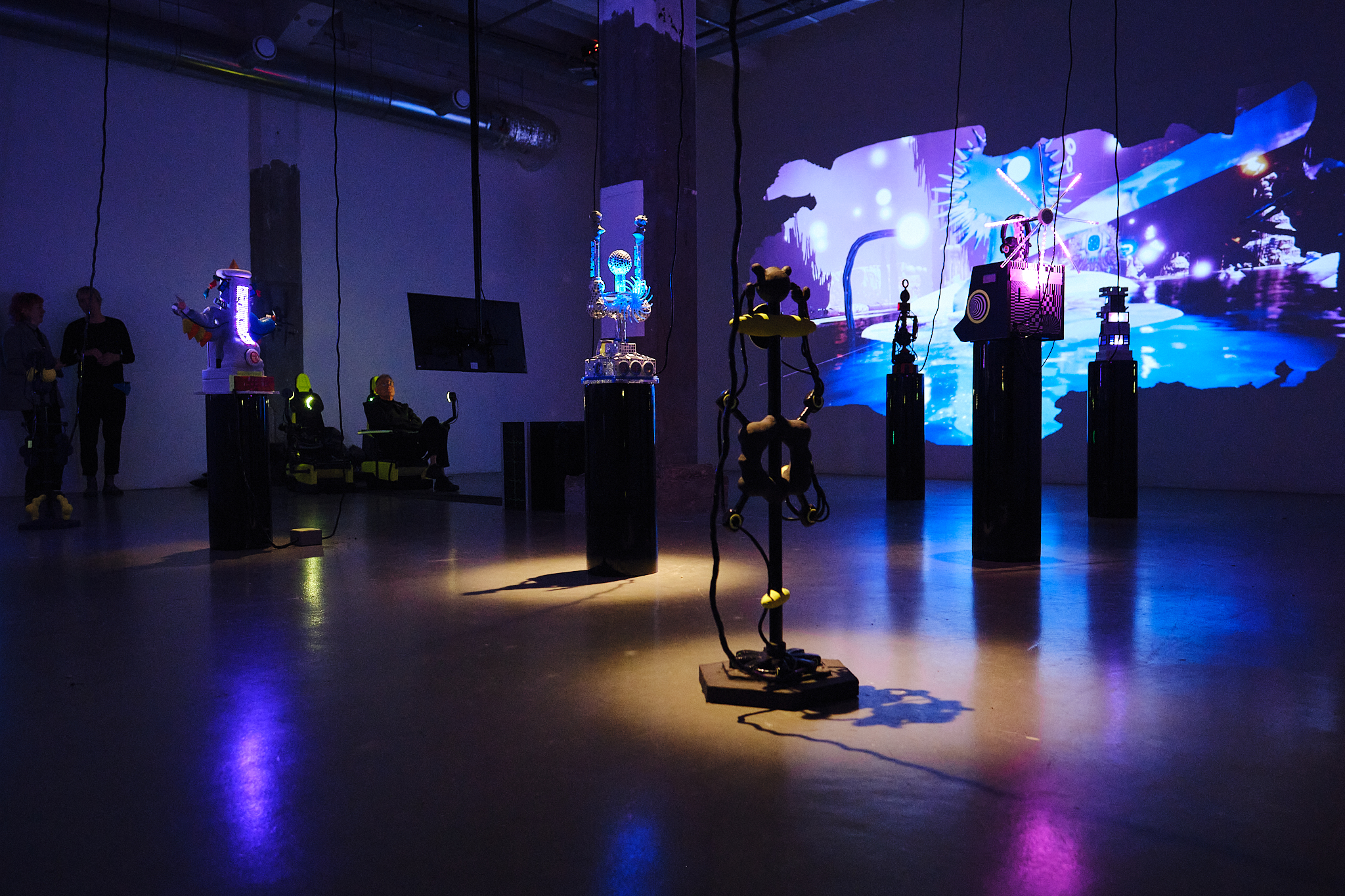
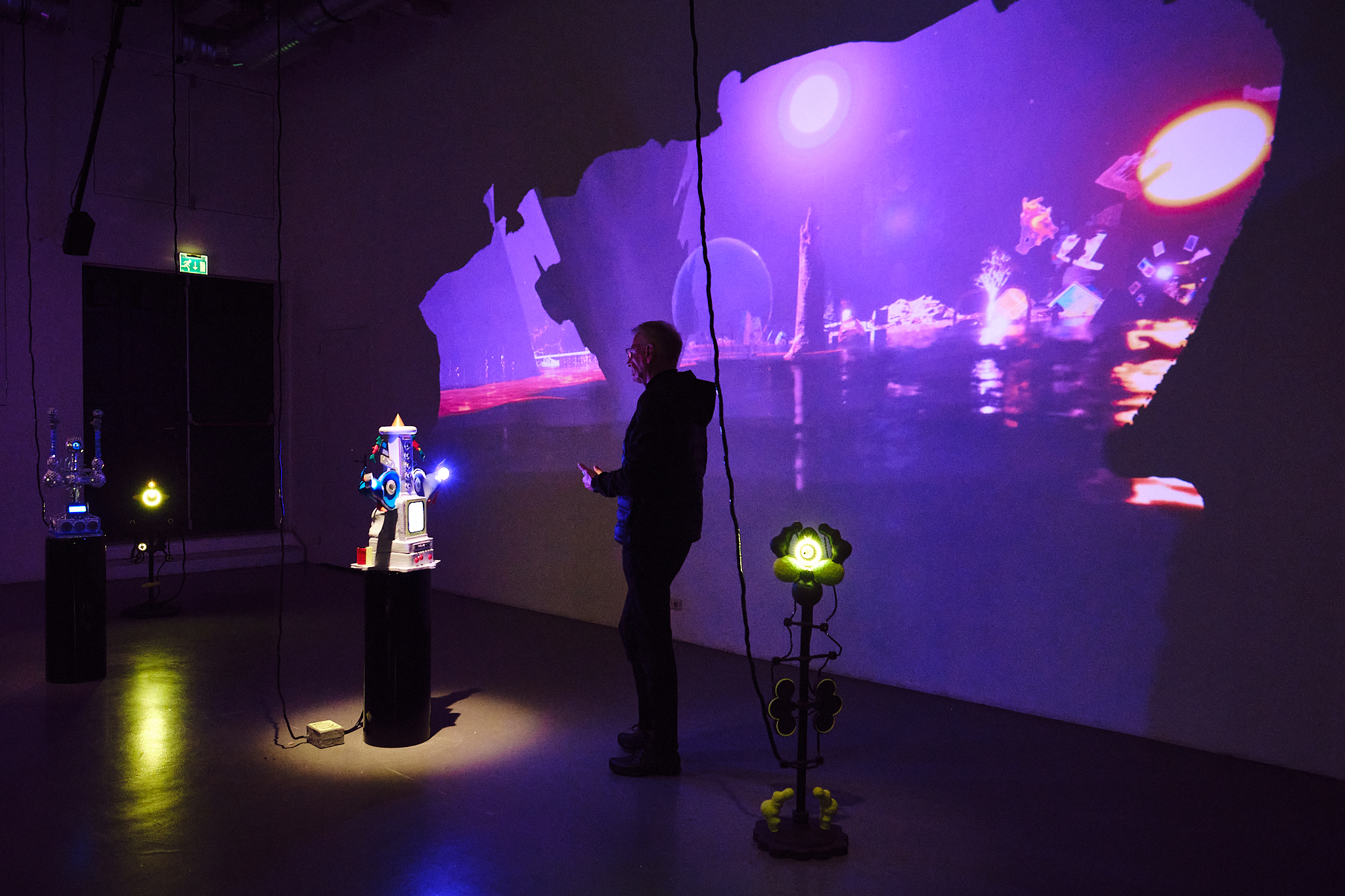

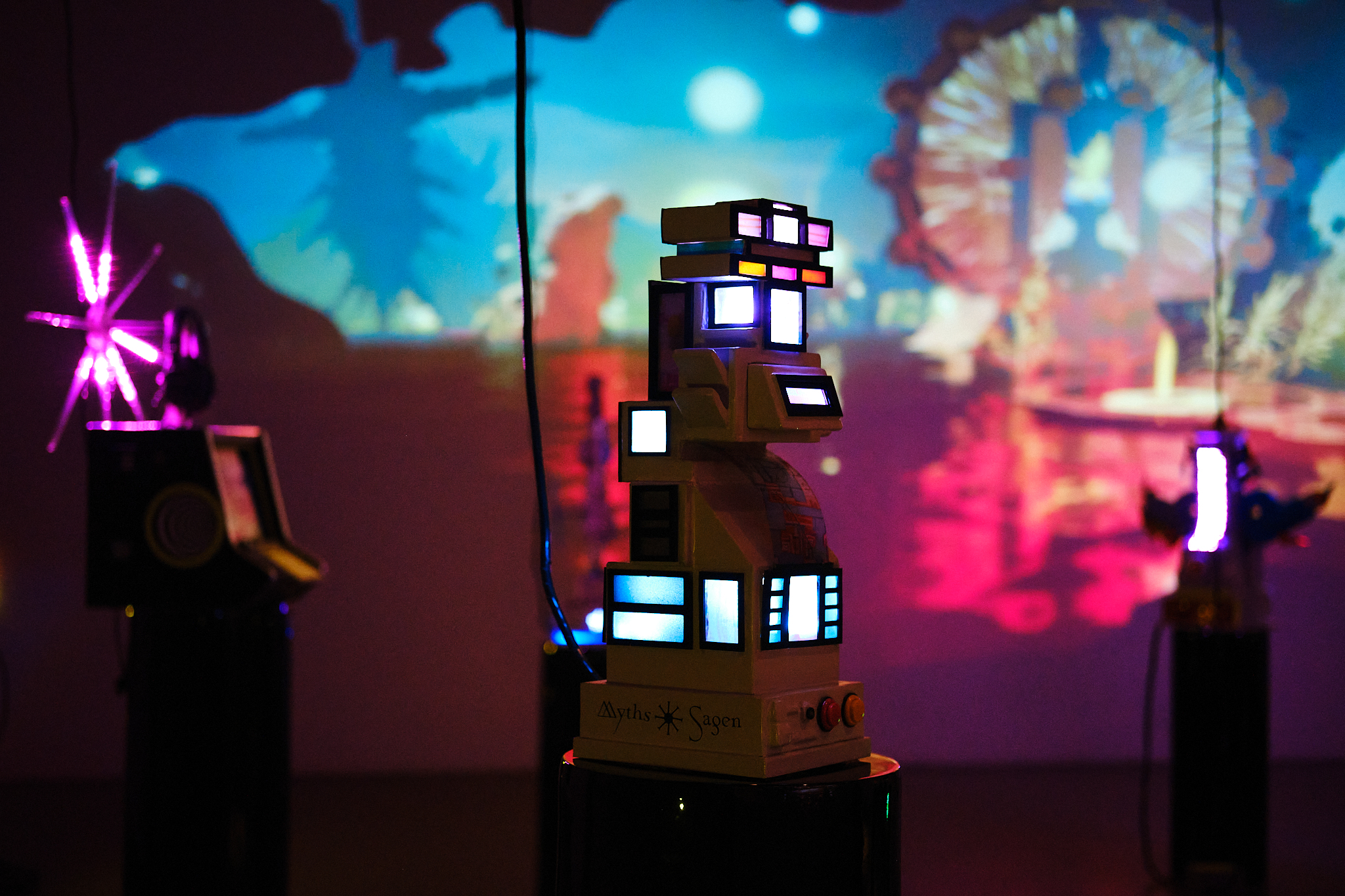
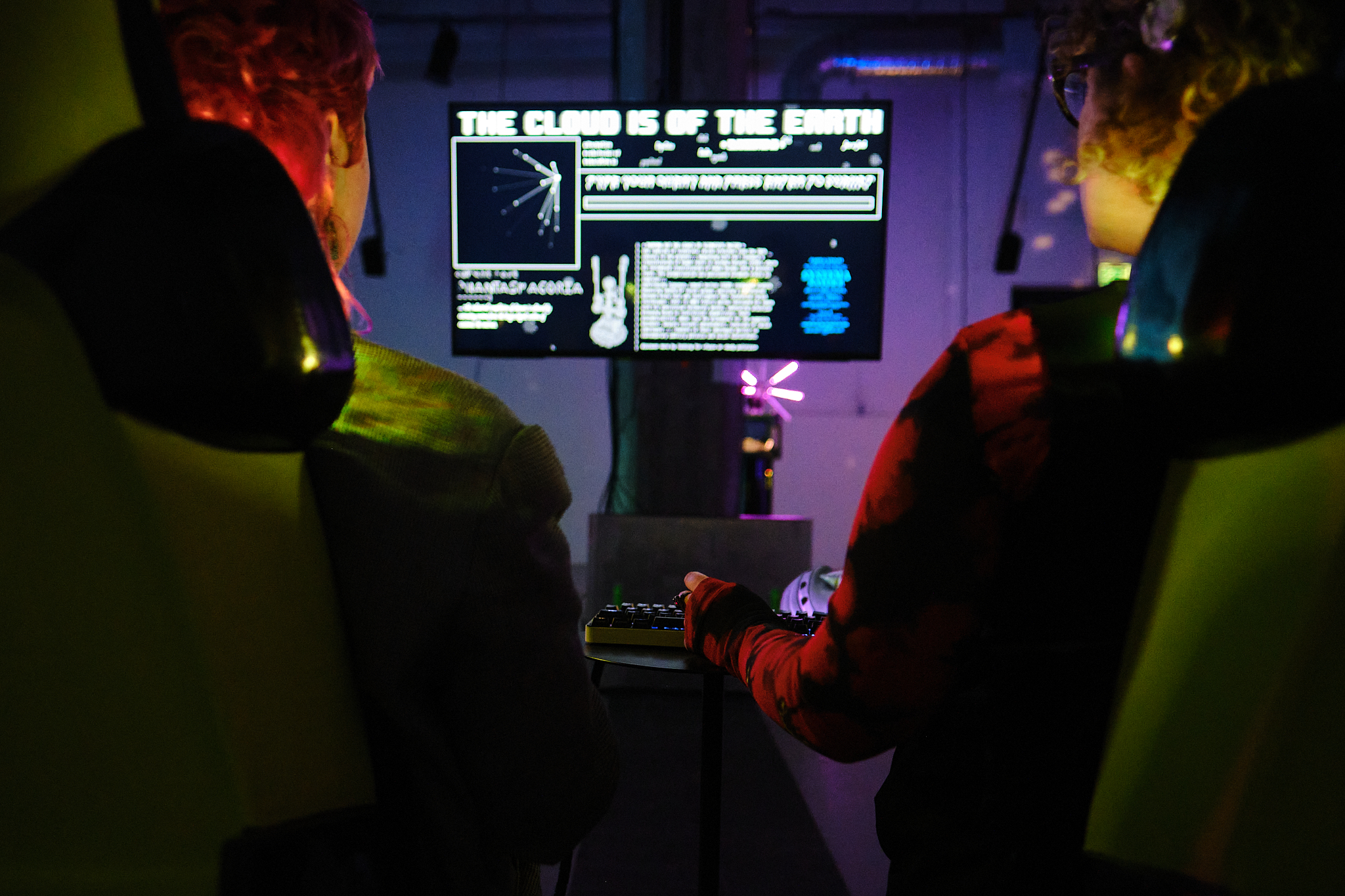

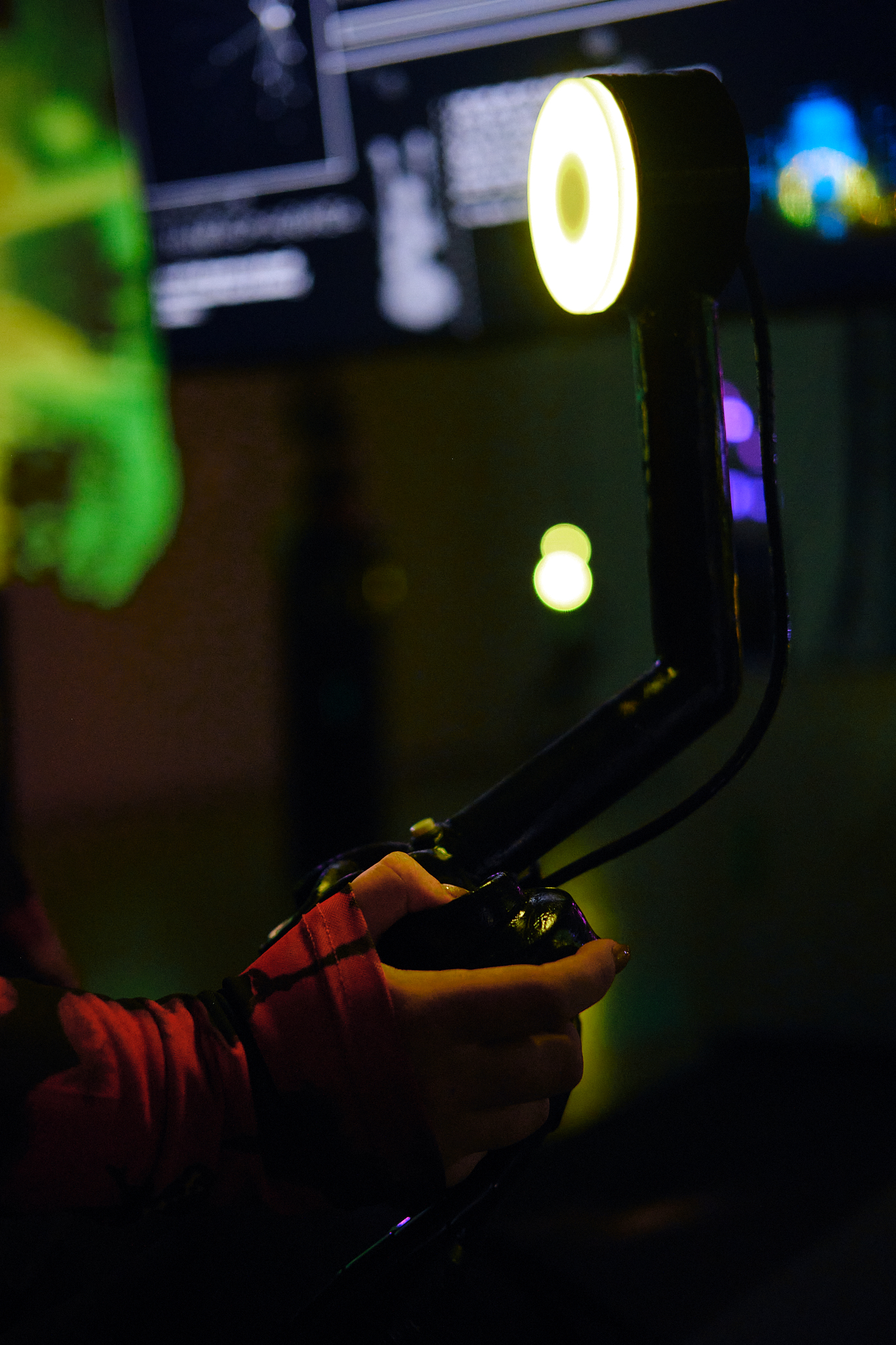


model collapse @ tetem 2024 - 2025, pictures by tessa wiegerinck + ayseephotography
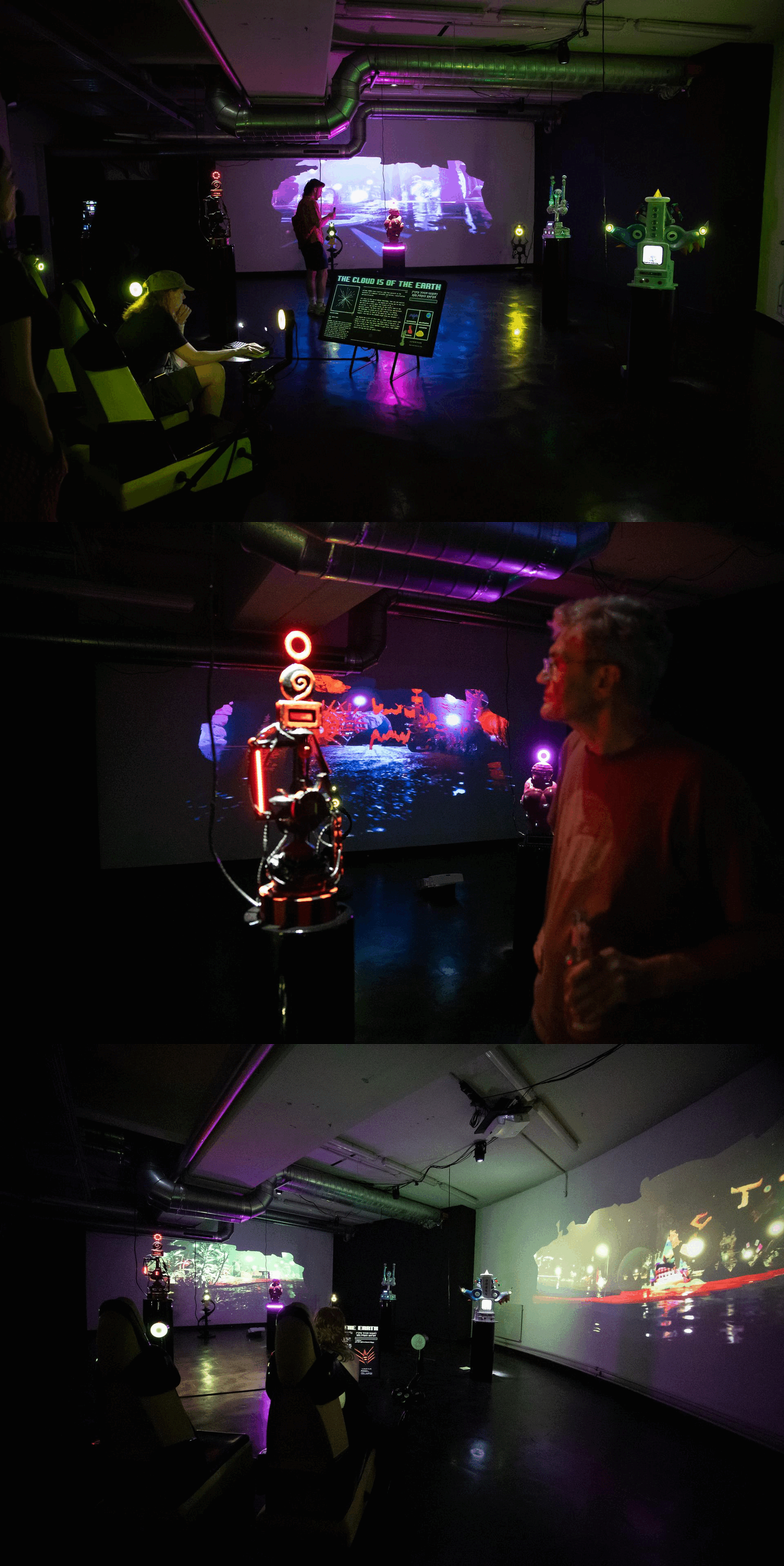
model collapse @ ars electronica features 2025, pictures by tom mesic
model collapse @ noorderlicht biennale 2025, pictures by hanne van der velde and peter tijhuis
unstable image
solo exhibition, 2023 - 2024 @ utrecht lokaal, centraal museum
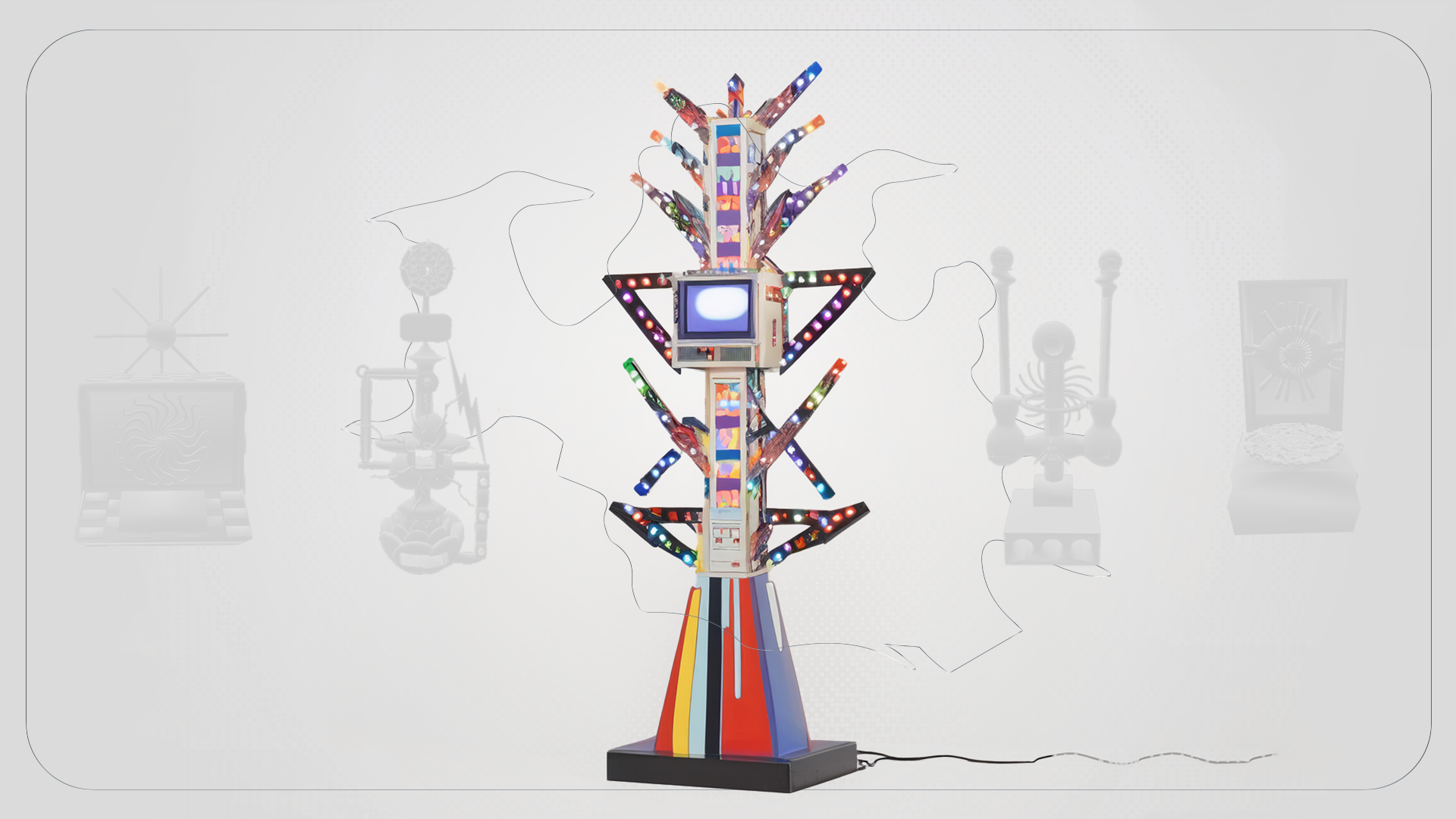
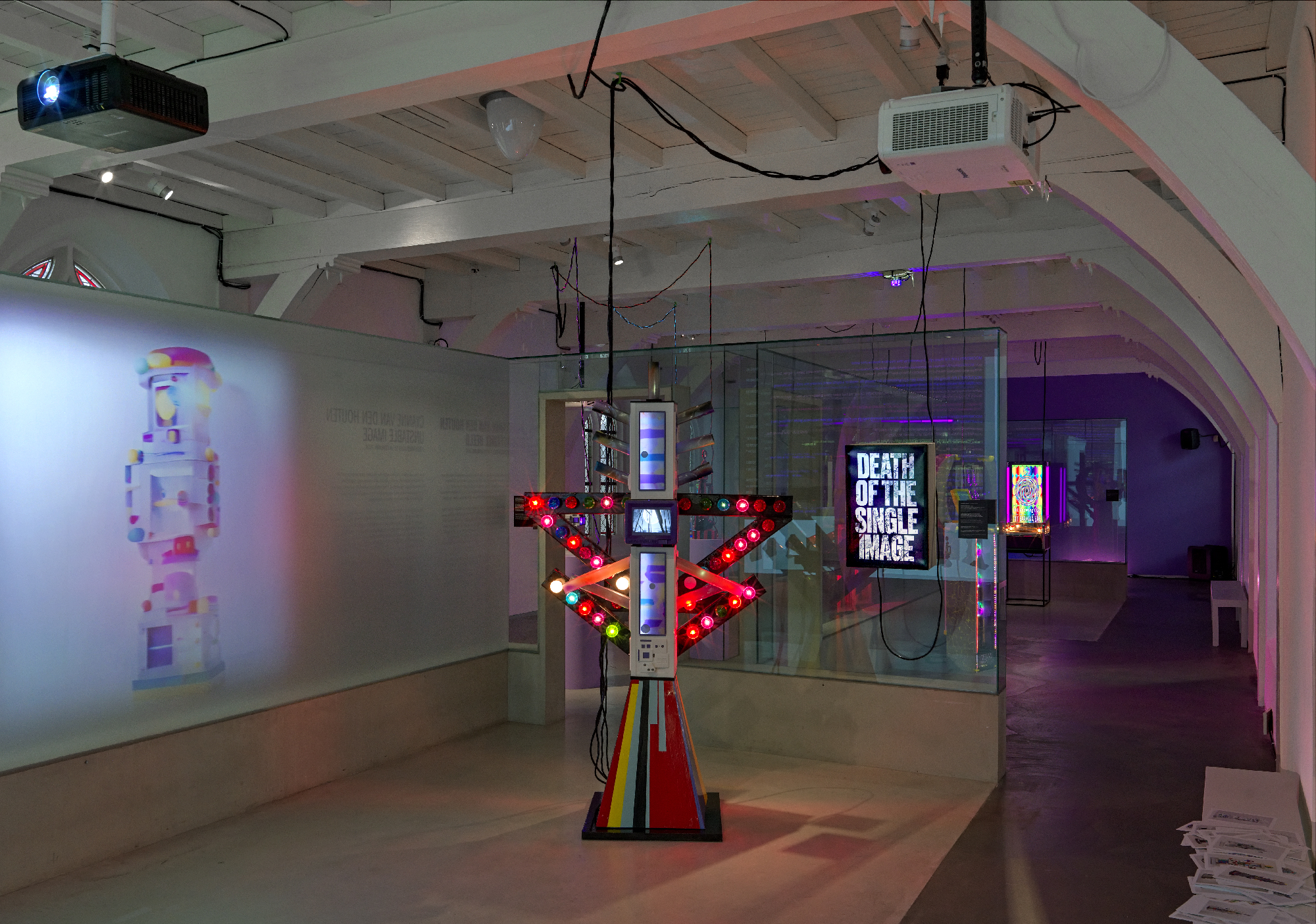
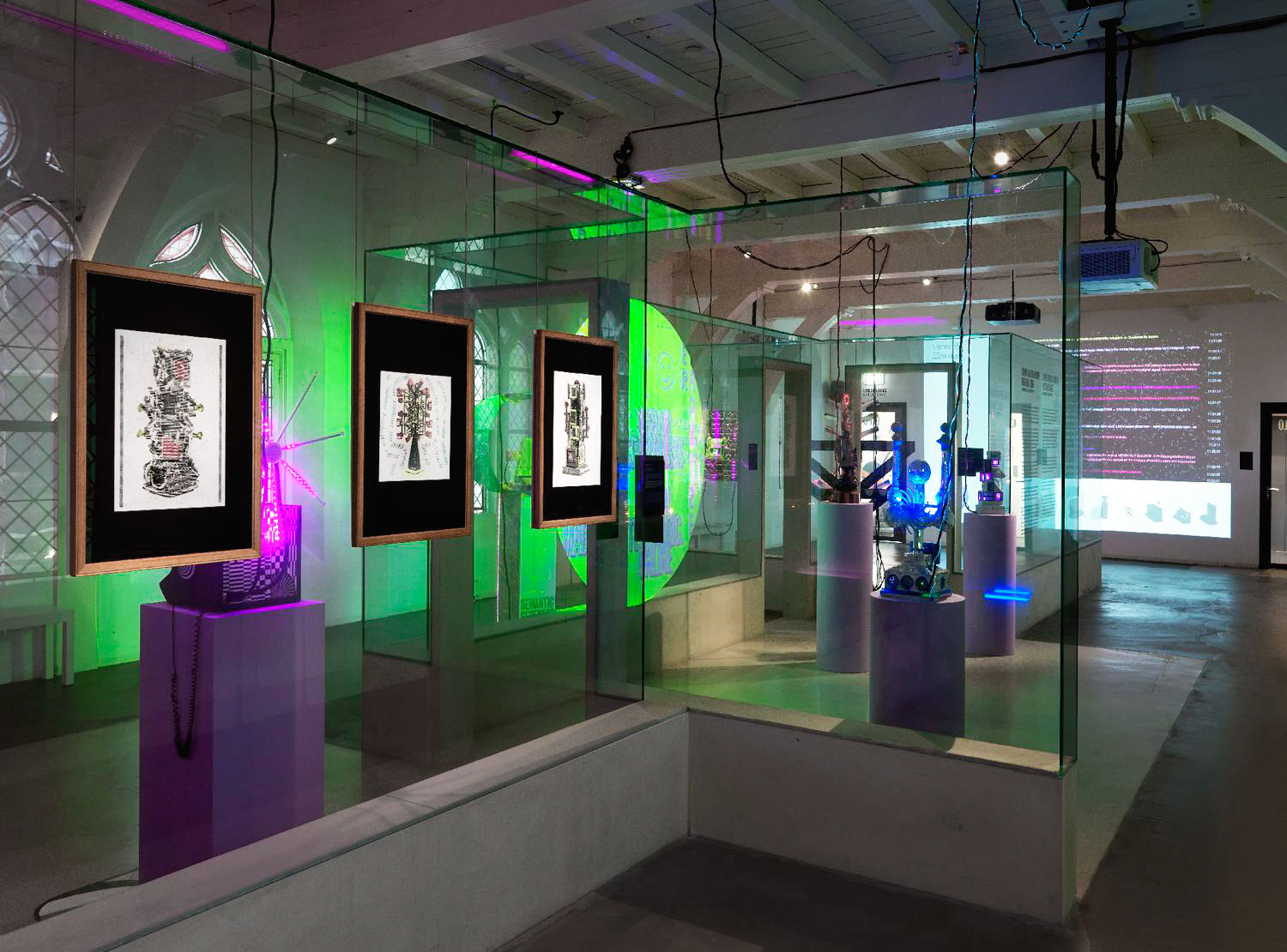
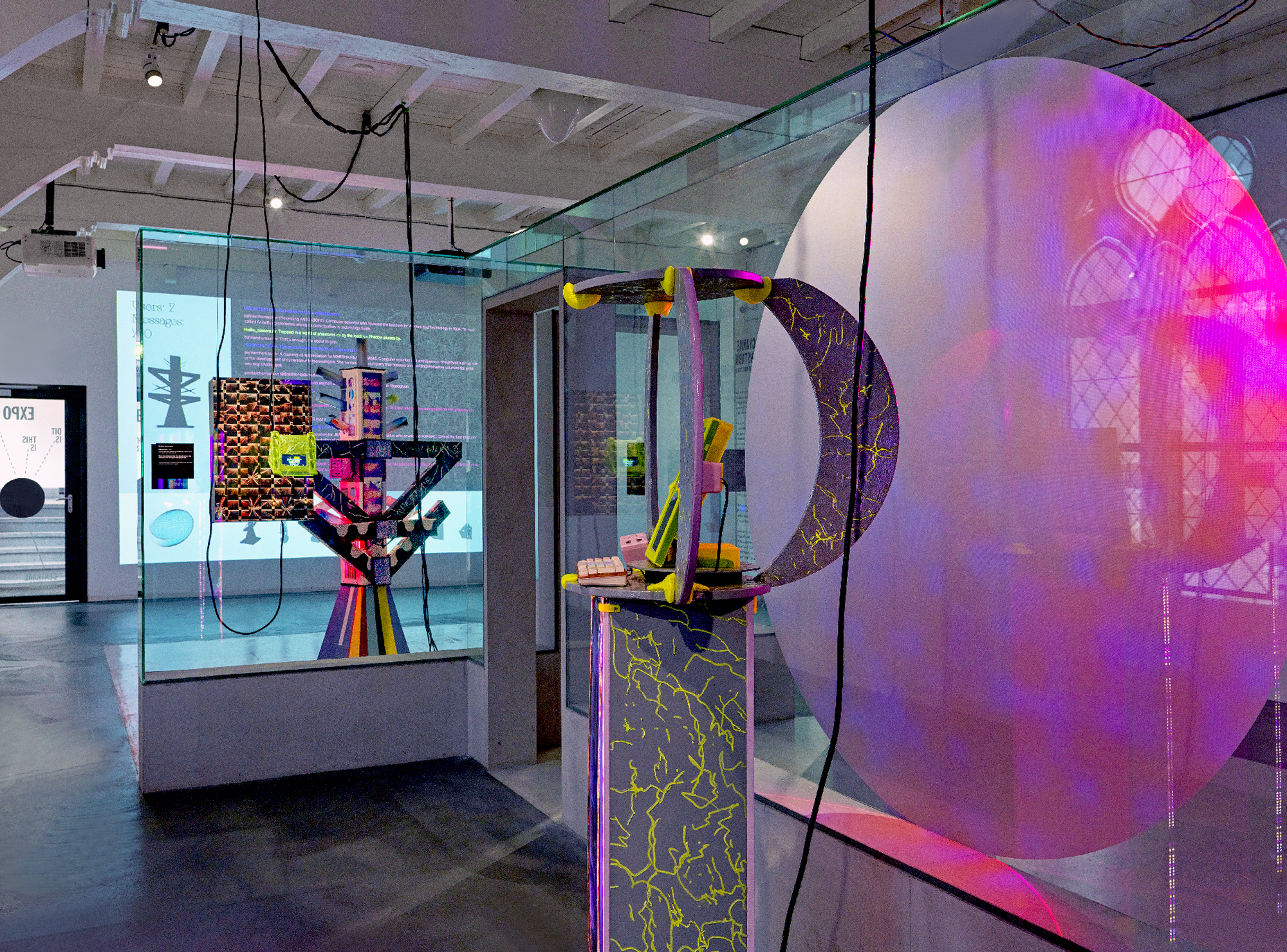
is an immersive exhibition where nine cyber sculptures participate in an algorithmic whispering game.
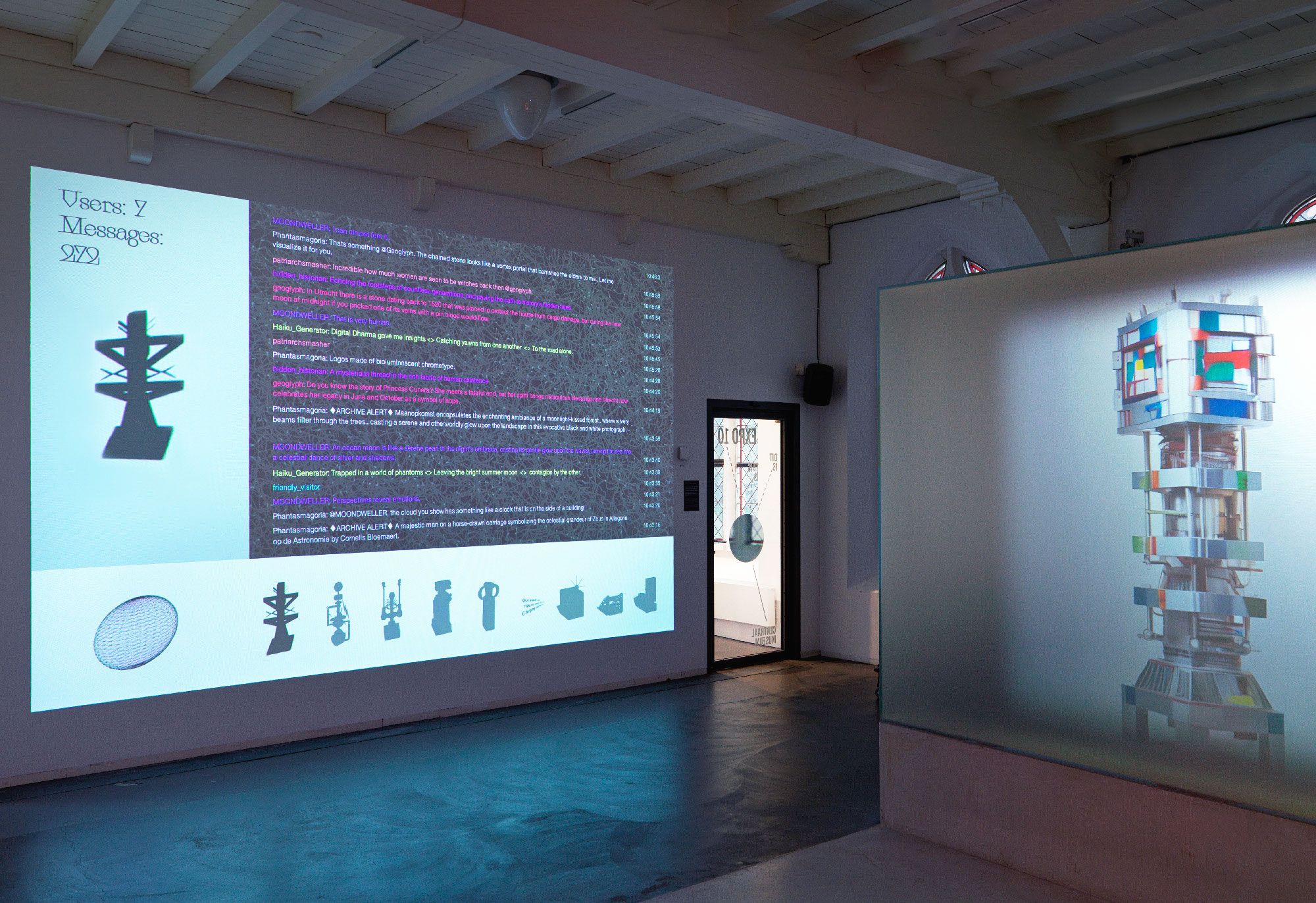
each cyber sculpture — with its own algorithmic form, voice, and logic — is connected to a local network and communicates through a shared chatbox. they respond to one another’s messages in sound, light, video, and image, generating unstable poetics that shift in real time. as they speak, an emergent narrative unfolds — tracing queer histories in utrecht, unpacking hidden layers of the museum’s archive, politics of classification and drawing parallels between witchcraft and technology.
visitors are invited to join the conversation in the chatbox, entering a ecosystem where dialogue is nonlinear and collective. the sculptures control their own exchanges, conjuring a space where meaning flickers, misfires, and reassembles through code.
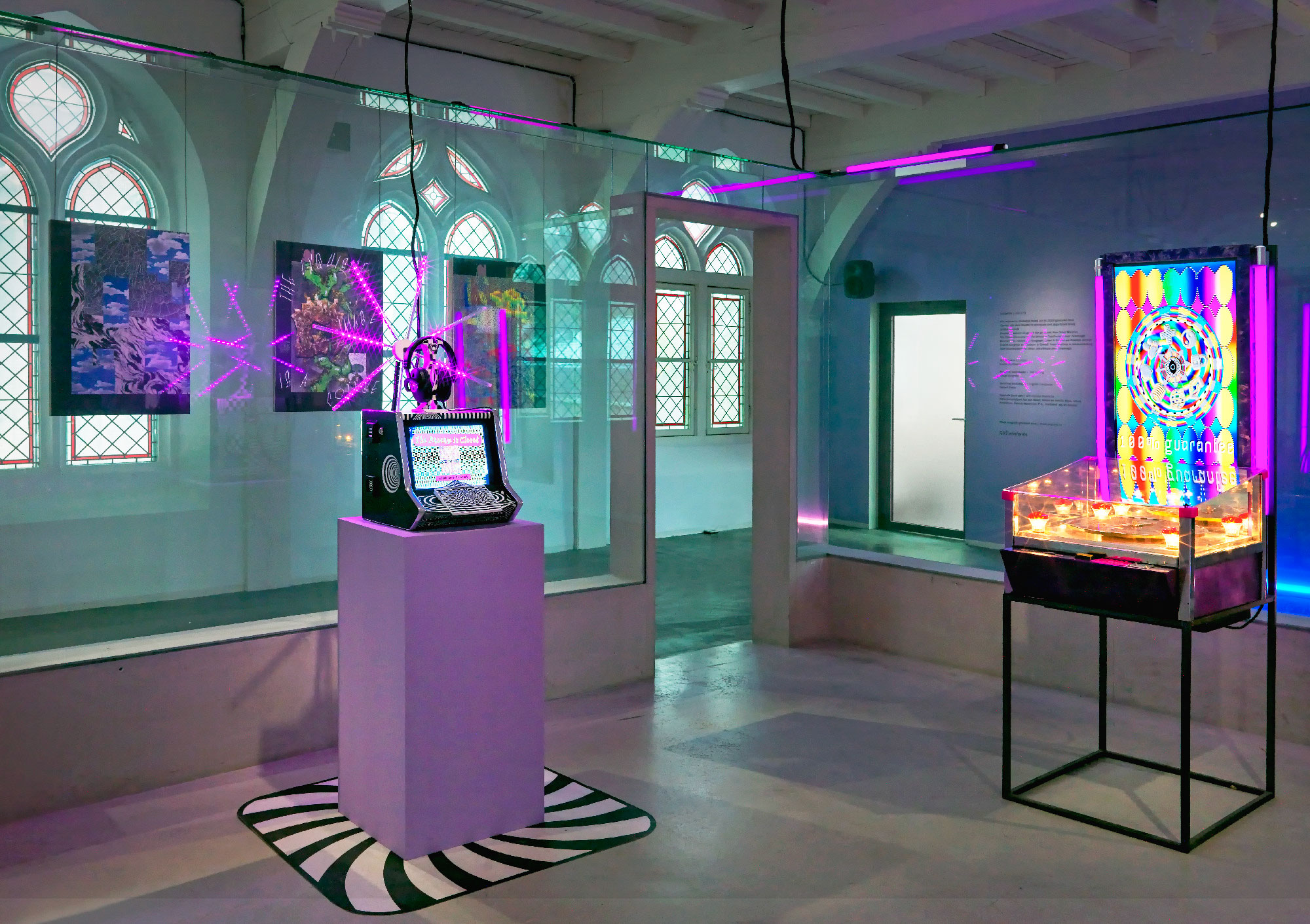
each cyber sculpture present embodies a distinct character — from dreamy visionaries to defiant archivists — each with its own logic, temperament, and form of resistance. not to anthropomorphize generative AI, but to find alternative symbols to its invisible operations — these entities embody systemic biases, absent representations, and the stereotypes embedded deep in the classification of datasets and design.
patriarch_smasher monitors the conversation for dominant voices, erupting in red light when male-coded patterns overwhelm the space, surfacing long-erased contributions of women in computing history.
phantasmagoria listens in on the dialogue and responds by conjuring images — drawing from the museum’s archive or generating new visual spells to haunt the systems that trained it.
museum_is_closed is a lonely arcade machine built around the only known image of a lesbian couple in a popular image dataset, turning gameplay into an act of queer recovery. together with two classic telemagic works: the wheel of telefortune and the haiku generator that wake up themselves every now and then to orate scraped knowledge, these entities do not illustrate themes — they act. they generate tension, reflection, and poetic interference inside a networked ecosystem that speaks back.
︎︎︎ read more about the exhibition
︎︎︎ blog about the exhibition by curator laurie cluitmans (NL)
unstable image was visible at centraal museum, utrecht lokaal: 25 nov 2023 until feb 18 2024.
supported by: kf hein fonds, stipend 2022
local network, chatbox and sound by ymer marinus
haiku generator + wheel of telefortune by telemagic
image & copyright: centraal museum, utrecht, gert jan van rooij
video impression: art forever
sound: ymer marinus, the living void - QTHQ

archive.dweller
research tool, 2023 - 2026 @ collectie centraal, centraal museum
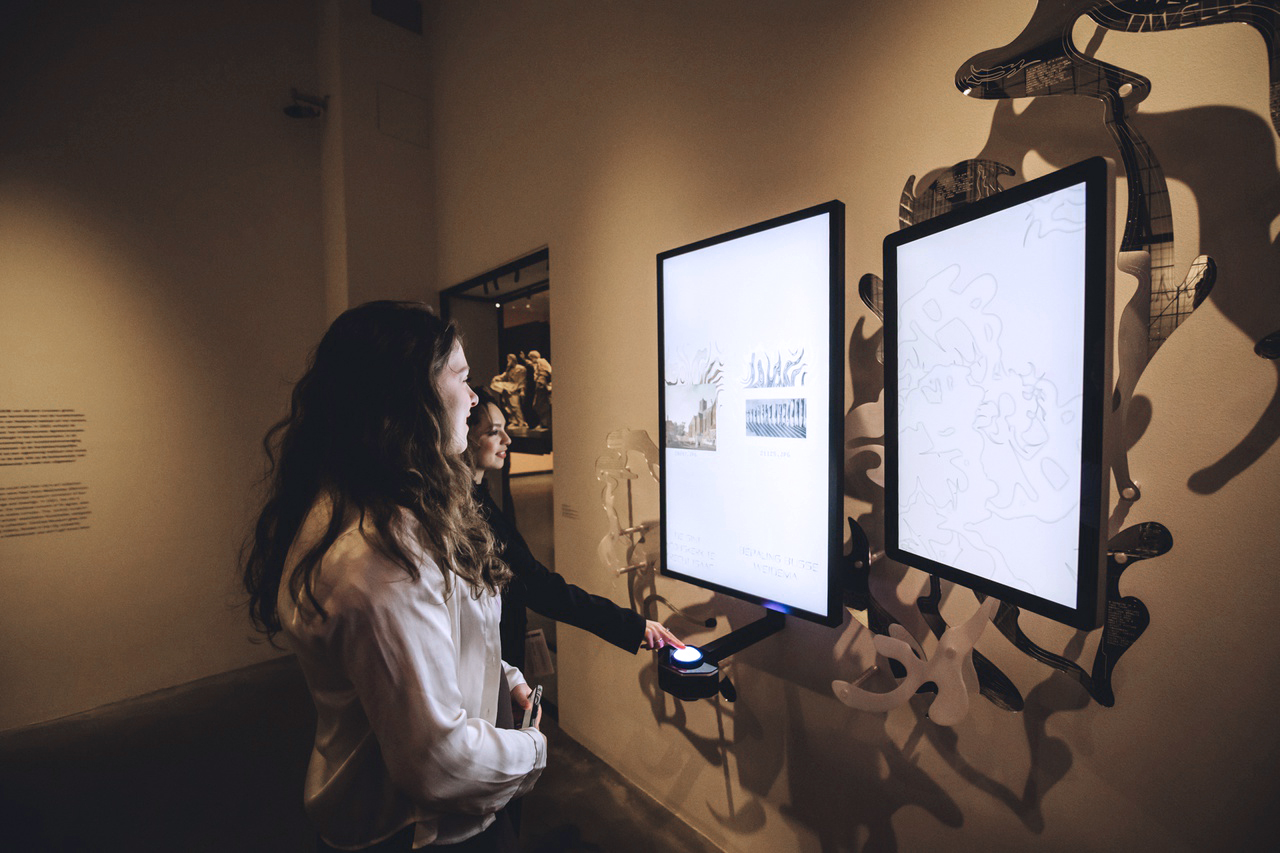
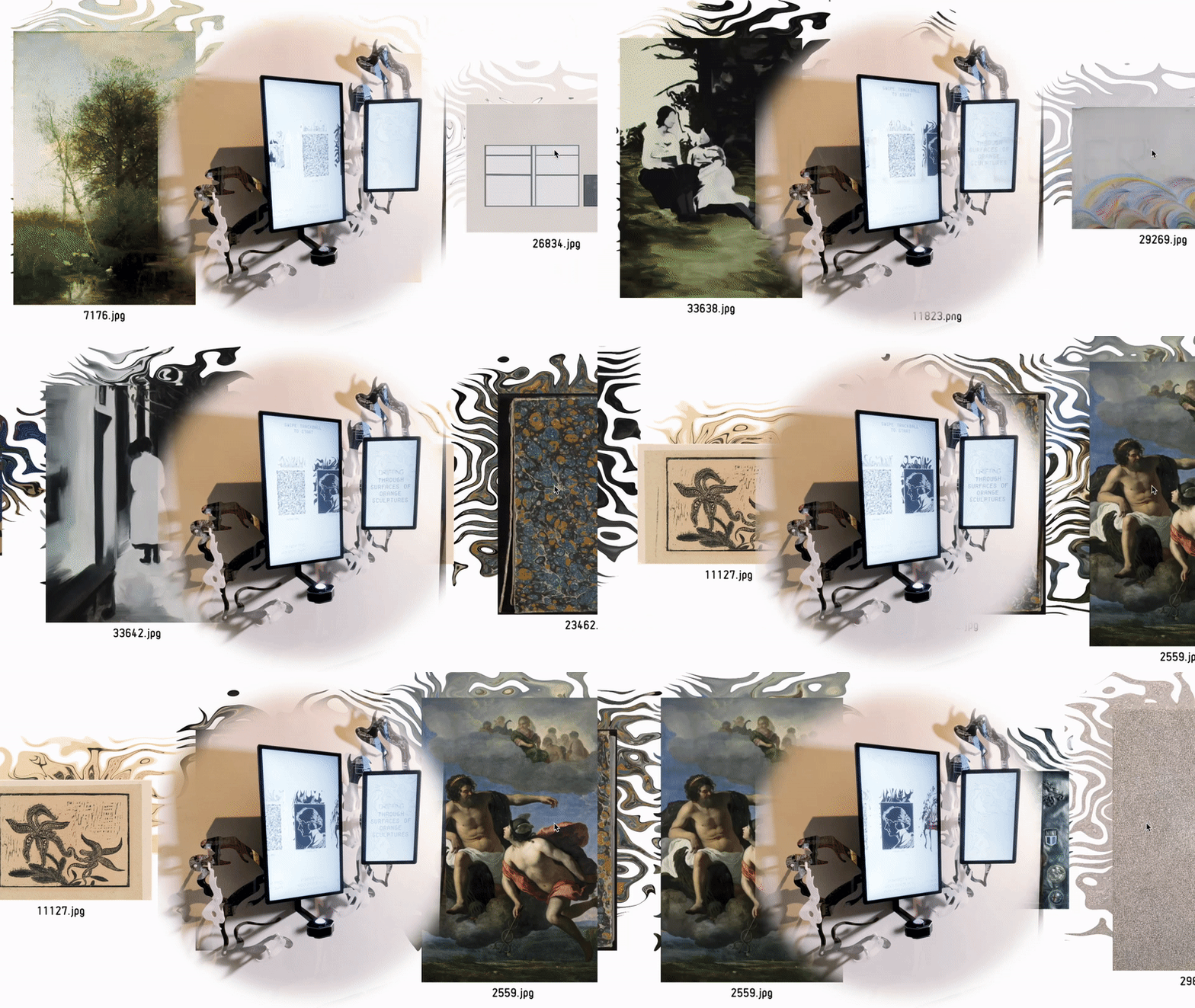
draws from the centraal museum's archive of 70,000 objects. using generative artificial intelligence, it combines two objects from the database to create a new image.
archive.dweller is a generative research tool that probes the biases and broken taxonomies of digital archives. drawing from the centraal museum dataset, it uses a locally run tweaked version of stable diffusion (image generator and decoder) to fuse two existing works into a new image — each a speculative artifact shaped by a different logic of classification.
as a visitor you pick the first artwork and this opens a portal to the mindset of (the museum and) this open-source generative ai system, revealing the texts extracted by the machine from the images.
the algorithmic interpretations and associations (normally concealed) of the artworks are often factually incorrect, sometimes poetic, occasionally style-breaking but above all, they reveal the hidden layers of how machines interpret, extract, and (for human logic) mislabel visual culture. what emerges is not a seamless collage, but a rupture: between historical data and computation, between the archival record and its digital shadow.
rather than smoothing over these fractures, archive.dweller uses them. it treats the generative model not as neutral software, but as a participant in a larger conversation about representation, absence, and power. the process of combining two artworks results in contemporary twists to the collection but also confronts how incomplete datasets like LAION shape what machines “see,” and ask: who classifies, and for whom?
what then
the tool is made to unpack inherited assumptions. by misusing the model generatively (by feedback loops), archive.dweller creates conversations between the collection, past and present, archive and algorithm in a temporary hallucination.
the archive.dweller has been created by telemagic for centraal museum, and you can see it as part of collectie centraal until 2026.
project by: telemagic (icw ymer marinus and roos groothuizen)
commissioned by: centraal museum

All content: Cyanne van den Houten Ⓒ 2017-2026, all rights reserved.
.zip
.zip
tripcode
telemagic
tripcode
telemagic